
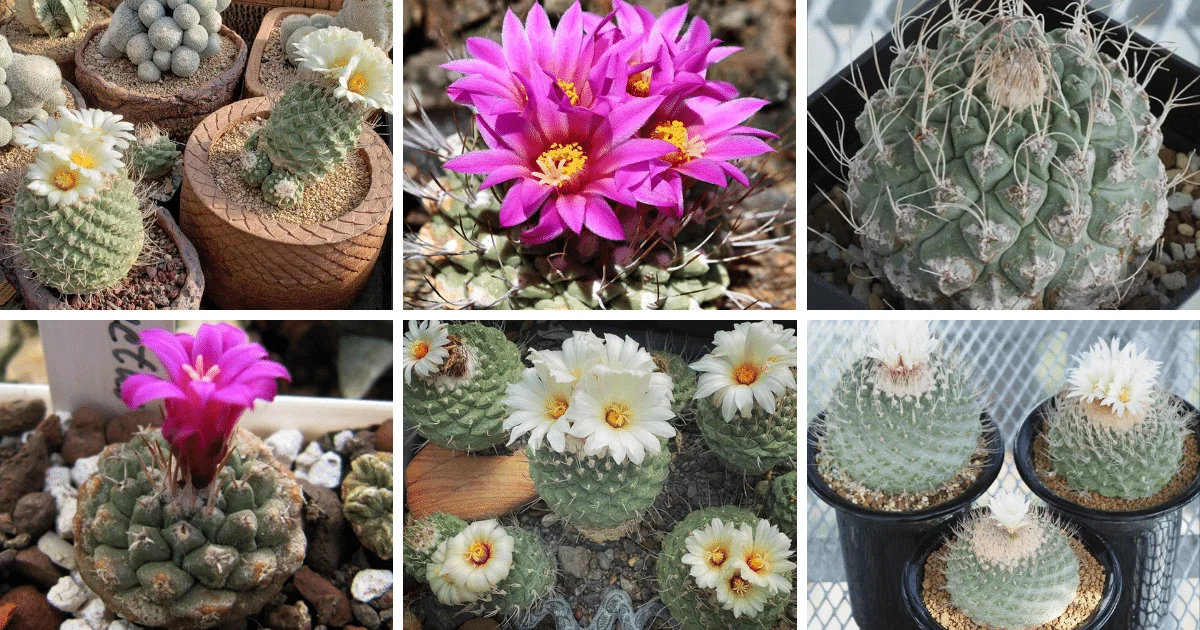

Strombocactus is a genus of cacti that has its origins in the family Cactaceae. It comprises only two species, both of which are native to Mexico. These plants are small, globular, or cylindrical and often have strikingly beautiful flowers.
The first species of Strombocactus, S. disciformis, was described in 1844 by the German botanist Franz Boos. This plant is found in the Mexican states of San Luis Potosi, Zacatecas, and Coahuila. It grows up to 5 cm tall and 6 cm wide and has 11 to 13 ribs. Its flowers are small, pink or purple, and appear in summer.

The second species, S. corregidorae, was described in 1965 by the American botanist Lyman Benson. It is found in the Mexican state of San Luis Potosi and grows up to 8 cm tall and 5 cm wide. It has 9–13 ribs, and its flowers are larger than those of S. disciformis, up to 3 cm long and yellow or orange.
Strombocactus plants are adapted to the dry and arid conditions of their natural habitat. They grow in rocky areas, on hillsides, or in gravelly soil. Their stems are covered in small, woolly areoles that produce spines. The spines are usually short and thick and can be white, yellow, or brown.

These plants are slow-growing and can take several years to reach maturity. They are also relatively difficult to cultivate, as they require a very specific set of growing conditions. They like well-draining soil and should be watered appropriately, especially during the winter months when the plants are dormant. They should be grown in bright light but protected from direct sunlight, which can scorch their delicate skin.
Despite their challenging cultivation requirements, Strombocactus plants are highly sought-after by collectors of rare and unusual cacti. They are prized for their unique shape, striking flowers, and the challenge of growing them successfully.

In conclusion, Strombocactus is a small genus of cacti that is native to Mexico. These plants are known for their unique shape and beautiful flowers, but they can be challenging to grow. If you are a cactus enthusiast looking for a new challenge, consider adding a Strombocactus plant to your collection. With patience and care, you may be rewarded with the sight of its beautiful blooms.
Here are the 3 Most Popular Types Of Strombocactus Pictorial Guide :
Strombocactus Disciformis

Strombocactus Disciformis is a small, globular cactus native to Mexico. It has a distinctive appearance with spiraling, twisted spines and pinkish-yellow flowers that bloom in the spring or summer. This slow-growing plant can take several years to reach maturity and is well-suited for rock gardens or succulent arrangements. It prefers bright, indirect light and infrequent watering and can be propagated by seeds, offsets, or grafting. Strombocactus Disciformis is a popular choice for cactus enthusiasts due to its unique appearance and ease of care.
Strombocactus Corregidorae

Strombocactus Corregidorae is a rare cactus species found only in a small region of central Mexico. It has a globular shape with tightly packed, cylindrical tubercles and long, straight spines. The flowers of Strombocactus Corregidorae are small and yellow, blooming in the spring or summer. This slow-growing plant can take several years to reach maturity and is best grown in a well-draining soil mix with infrequent watering. It prefers bright, indirect light and can tolerate some cold temperatures. Due to its rarity and unique appearance, Strombocactus corregidorae is highly sought after by cactus collectors and enthusiasts.

Strombocactus Pulcherrimus

Strombocactus Pulcherrimus is a small, globular cactus species native to central Mexico. It has a distinctive appearance with tightly packed, cylindrical tubercles and small, curved spines that are yellow in color. The flowers of Strombocactus Pulcherrimus are pink or lavender and bloom in the spring or summer. This slow-growing plant can take several years to reach maturity and is best grown in a well-draining soil mix with infrequent watering. It prefers bright, indirect light and can tolerate some cold temperatures. Due to its unusual appearance and relative rarity, Strombocactus Pulcherrimus is a popular choice for cactus collectors and enthusiasts.
How To Grow And Care For Strombocactus

Strombocactus is a genus of cactus that is native to Mexico. These plants are known for their unique and interesting appearance, and they can be great additions to your indoor or outdoor garden. Here are some tips on how to grow and care for Strombocactus:
- Light: Strombocactus plants prefer bright, indirect sunlight. If you are growing these plants indoors, place them near a window that has more exposure to sunlight. If you are growing them outdoors, make sure they are in a spot that gets partial shade.
- Soil: These plants prefer well-draining soil. You can use a cactus potting mix or make your own by combining equal parts sand, perlite, and peat moss.
- Water: Strombocactus plants are drought-tolerant and do not require frequent watering. Water them only if the surface of the soil appears totally dry. When you do water them, make sure to water thoroughly and allow any excess water to drain away.
- Temperature: These plants prefer warm temperatures, ideally between 65 and 85°F (18 and 29°C). Avoid leaving them with temperatures below 50°F (10°C).

- Fertilizer: Strombocactus plants do not require much fertilizer, but you can feed them with a diluted cactus fertilizer once a month during the growing season (spring and summer).
- Propagation: You can propagate Strombocactus plants by taking stem cuttings. Make sure the cuttings have time to callus for a few days before repotting them in well-draining soil. Keep the soil moist but not soaking wet until new growth appears.
- Pests and diseases: Strombocactus plants are generally resistant to pests and diseases, but you should still keep an eye out for common issues like mealybugs, scale insects, and root rot. If you notice any signs of pests or diseases, quickly apply an appropriate insecticide or fungicide to get rid of this issue.
- Potting and repotting: Strombocactus plants have shallow roots, so they do not require large pots. Choose a pot that is just slightly larger than the plant’s current pot, and make sure it has drainage holes. Repotting is typically only necessary every few years or when the plant has outgrown its current pot.
- Pruning: Strombocactus plants do not require much pruning, but you can remove any dead or yellowing leaves with sharp, clean scissors.
- Winter care: During the winter months, Strombocactus plants may go dormant and require even less water than usual. Keep them in a cool, dry place, and only water them sparingly when the soil is completely dry.
In summary, Strombocactus plants are relatively easy to care for and can make a unique addition to your plant collection. They like indirect sunlight, well-draining soil, and random watering. With proper care, your Strombocactus plant should thrive and may even produce beautiful blooms in the spring and summer.
How to Propagate Strombocactus

Strombocactus is a small genus of cacti that is native to Mexico. Propagating Strombocactus can be done using two main methods: by seeds or by offsets. Here’s how to do it:
Propagation By Seeds
- Obtain fresh Strombocactus seeds from a reputable supplier or harvest them from a mature plant.
- Fill a good drainage cactus soil mix into a seed tray.
- Sow the seeds on the surface of the soil and dig them lightly into the soil.
- Water the soil gently to moisten it, and cover the tray with a clear plastic wrap to create a mini greenhouse effect.
- Place the tray in a bright, warm location, but away from direct sunlight.
- Water the seeds lightly whenever the soil is dry, but do not overwater.
- The seeds should germinate within 2–4 weeks, depending on the species.

Propagation By Offsets
- Wait until your Strombocactus plant has produced several offsets, or “pups.”
- Carefully remove the offsets from the parent plant using a sharp, sterile knife or scissors.
- Allow the cuttings to form calluses for a few days.
- Plant the cuttings in a well-draining cactus soil mix and water gently.
- Place the pot in a sunny, warm location, but away from strong sunlight.
- Water the cuttings sparingly until they start to root and establish themselves.
Propagation By Grafting
- Another method to propagate Strombocactus is through grafting. This method works best for slow-growing species, which can take years to reach maturity.
- Choose a healthy, mature plant of a faster-growing cactus species, such as
- Hylocereus or Trichocereus, to use as a rootstock.
- Use a sharp, sterile knife to make a clean cut on the rootstock, removing the top portion of the plant.
- Make a similar clean cut on the bottom of the Strombocactus plant.
Join the two cuts together and use grafting tape or a rubber band to hold them in place. - Place the grafted plant in a warm, bright location, but away from direct sunlight.
- Water the plant sparingly until it has established itself on the rootstock.
Grafting allows the Strombocactus plant to grow more quickly and can also improve its resistance to pests and diseases. However, it requires some experience and skill, so it may not be suitable for beginners.
In general, Strombocactus plants prefer bright, indirect light and well-draining soil. They are also adapted to low humidity and can tolerate dry conditions, but avoid exposing them to extreme temperatures or sudden temperature changes. With proper care and propagation, Strombocactus can be a rewarding addition to your cactus collection.
Top 5 FAQ And Answers For Strombocactus

Q: How often should I water my Strombocactus?
A: Strombocactus prefers infrequent watering, and the frequency depends on the environmental conditions. Water the plant when the soil is completely dry, usually every 2-3 weeks. During the winter, reduce watering to once a month.
Q: What type of soil is best for Strombocactus?
A: Strombocactus thrives in well-draining soil, such as a mix of sand, perlite, and cactus soil. Avoid using regular potting soil, which can retain too much moisture and cause root rot.
Q: Does Strombocactus need fertilizer?
A: Strombocactus is adapted to nutrient-poor soils, so it does not need frequent fertilization. You can apply a diluted, balanced fertilizer once every two months during the growing season, from spring to fall.
Q: How do I know if my Strombocactus is getting too much sunlight?
A: Strombocactus prefers bright, indirect light. If it receives too much direct sunlight, the plant may develop brown or yellow spots on the leaves, indicating sunburn. Move the plant to a shadier location to prevent further damage.
Q: How do I propagate Strombocactus?
A: Strombocactus can be propagated by seeds, offsets, or grafting. To propagate by seeds, sow fresh seeds in well-draining soil and keep the soil moist. To propagate by offsets, wait for the plant to produce several pups, then carefully remove them and plant them in new soil. Grafting is a more advanced method that involves joining a Strombocactus plant to a faster-growing rootstock.
Top 10 Interesting Facts About Strombocactus

- Strombocactus is a small genus of cacti that includes about six species, all of which are native to Mexico.
- The name Strombocactus comes from the Greek words “strombos,” which means twisted or winding, and “kaktos,” which means cactus.
- Strombocactus plants are small and globular, with spines that can be straight or twisted. They usually grow to only a few inches in height.
- The flowers of Strombocactus are small and usually pink or yellow in color. They bloom in the spring or summer and last only a few days.
- Strombocactus plants are adapted to hot and dry environments, and they can survive long periods of drought by storing water in their stems.
- Strombocactus is a slow-growing plant, and it can take several years for it to reach maturity.
- Some species of Strombocactus are endangered due to habitat loss and overcollection for the ornamental plant trade.
- The genus Strombocactus is closely related to other cactus genera such as Mammillaria and Coryphantha.
- Strombocactus has been used in traditional medicine to treat various ailments such as wounds, fevers, and digestive problems.
- Strombocactus has been used as a decorative plant in rock gardens, succulent arrangements, and small pots, and it is popular among cactus enthusiasts for its unusual appearance and low-maintenance requirements.


