
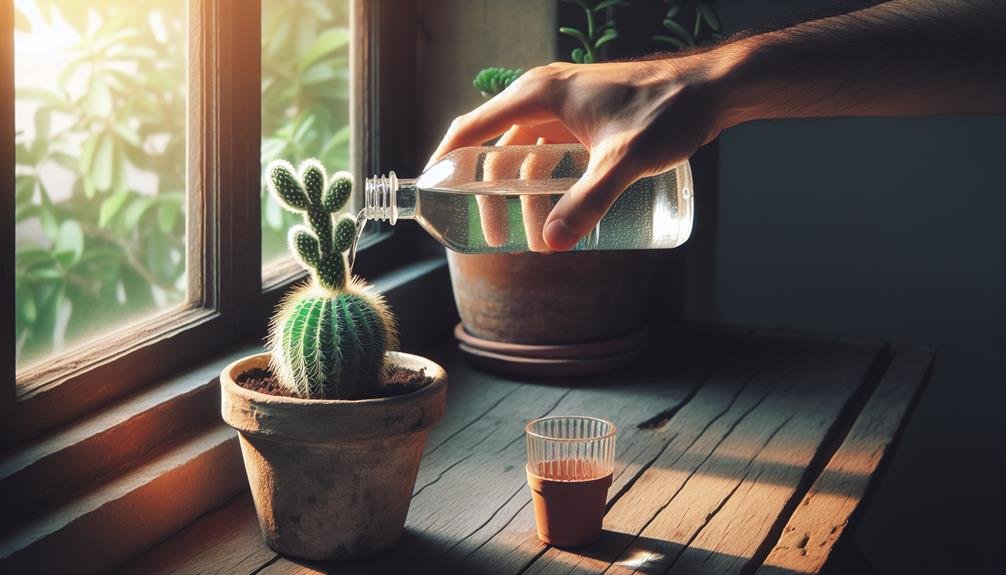
When it comes to watering your indoor cactus, think of it as finding the right rhythm in a dance; a delicate balance is key.
But how do you know if you're hydrating your spiky companion just right? Discover the subtle signs of a well-hydrated cactus and unravel the mystery behind the optimal watering frequency.
Uncover the best methods to water your cactus effectively and learn how to adjust your watering routine with changing seasons.
Stay tuned to unveil the essential tools that will help you master the art of keeping your indoor cactus thriving.
Signs of Proper Cactus Hydration
If your cactus is adequately hydrated, it will exhibit vibrant colors and firm, plump stems. These are clear indicators of a healthy plant. The vibrant colors signal that the cactus is thriving and receiving the right amount of water. Look for deep greens, blues, or even purples depending on the species of cactus you have. Dull or yellowish hues could mean your cactus is thirsty and in need of hydration.
Another sign of proper cactus hydration is the firmness of its stems. When you gently squeeze the stem between your fingers, it should feel taut and plump. If the stem feels soft or wrinkled, it's a sign that your cactus needs more water. Properly hydrated cacti have a certain resilience to them, indicating that they're storing water effectively.
Understanding Cactus Watering Frequency
To understand the appropriate watering frequency for your cactus, observe the soil moisture levels and adjust your watering routine accordingly. Cacti have different watering needs compared to other plants due to their ability to store water.
The frequency of watering your indoor cactus depends on various factors such as the type of cactus, the potting mix used, the size of the pot, the temperature, and the humidity levels in your home. Overwatering is a common mistake that can lead to root rot and other issues.
Check the moisture level of the soil by inserting your finger about an inch deep; if it feels dry, it's time to water. However, if it's still moist, hold off on watering to prevent waterlogging. Remember, it's better to underwater than overwater your cactus.
Best Watering Methods for Cacti
When watering your cactus indoors, ensure that you utilize a bottom-up watering technique to prevent overwatering and promote healthy root growth. This method involves placing your cactus in a container filled with water for a short period, allowing the roots to absorb water as needed. By avoiding top-down watering, you reduce the risk of water sitting on the surface, which can lead to root rot.

Another effective watering method for cacti is to use a watering can with a narrow spout. This allows you to target the water directly at the base of the plant, avoiding getting water on the spines or leaves, which can cause damage or promote fungal growth. Additionally, watering your cactus in the morning is ideal as it allows any excess moisture to evaporate during the day, reducing the risk of fungal diseases.
Remember to adjust the frequency of watering based on the specific needs of your cactus species and the environmental conditions in your home. By following these best watering methods, you can help your indoor cactus thrive and stay healthy.
Adjusting Watering in Different Seasons
Adjust your cactus watering routine based on the changing seasons to ensure optimal growth and health for your plant. During the warmer months, typically spring and summer, your cactus will be actively growing and may require more frequent watering. Keep an eye on the soil moisture levels and adjust your watering schedule accordingly. It's crucial not to overwater during these seasons as it can lead to root rot.
As the cooler fall and winter months approach, your cactus will enter a period of dormancy. This means that it will require less water as it isn't actively growing. Reduce the frequency of watering during this time to prevent the risk of overwatering. Remember, it's better to underwater your cactus during the winter than to overwater it.
Tools for Monitoring Cactus Moisture Levels
Consider utilizing a moisture meter to accurately monitor the moisture levels of your indoor cactus. These handy tools provide a quick and reliable way to assess whether your cactus needs watering. Moisture meters typically have probes that you insert into the soil near your cactus roots. The meter then gives you a reading of the moisture content, indicating whether the soil is dry, moist, or wet. This real-time data can help you avoid overwatering, a common issue that can harm cacti.
Another useful tool for monitoring cactus moisture levels is a hygrometer. Hygrometers measure the humidity levels in the air around your cactus, which indirectly affects the plant's water requirements. By keeping an eye on the humidity, you can adjust your watering schedule accordingly.
Additionally, using a simple wooden chopstick can also help determine if your cactus needs watering. Insert it into the soil near the cactus, and if it comes out dry, it's time to water. These tools can assist you in maintaining optimal moisture levels for your indoor cactus, promoting healthy growth and preventing issues related to over or under-watering.
Frequently Asked Questions
Can Indoor Cacti Be Overwatered, and What Are the Signs of Overhydration?
Yes, indoor cacti can definitely be overwatered. Signs of overhydration include wilting, yellowing, or translucent skin.
When too much water accumulates in the soil, it can lead to root rot and ultimately kill your cactus. Remember to water your indoor cacti sparingly and ensure proper drainage to avoid overwatering issues.
Keep an eye out for these indicators to maintain the health of your beloved cacti.
Are There Specific Types of Water That Are Better for Cacti, Such as Filtered or Distilled Water?
When caring for indoor cacti, using filtered or distilled water can be beneficial. These types of water help prevent the build-up of minerals in the soil, which can harm your cactus.
How Can Humidity Levels in a Room Affect the Watering Needs of Indoor Cacti?
Humidity levels in a room play a crucial role in determining how often you need to water your indoor cacti. High humidity can slow down the evaporation rate of water from the soil, meaning your cactus may not need as much water.
Conversely, in dry conditions, your cactus may require more frequent watering to compensate for faster evaporation. Monitoring humidity levels will help you adjust your watering schedule accordingly for happy, healthy cacti.
Are There Any Natural Remedies or Additives That Can Be Used to Improve Cactus Hydration?
To improve cactus hydration naturally, you can consider adding organic matter like compost to the soil. This can help retain moisture and provide essential nutrients.
Another option is using a well-draining soil mix to prevent overwatering and root rot.
Additionally, mulching the top layer of soil can reduce evaporation and keep the moisture levels stable.
Can the Size and Type of Pot Affect How Often a Cactus Needs to Be Watered?
When choosing a pot for your cactus, remember that the size and type can impact how often you need to water it. Smaller pots tend to dry out faster, requiring more frequent watering.
Porous materials like clay can help with drainage, preventing overwatering. Consider the pot size and material to find the right balance for your cactus's watering needs.
Experiment to see what works best for your specific plant.
Conclusion
Now that you know the optimal indoor cactus watering techniques, you can ensure your prickly friends stay healthy and thriving. By paying attention to signs of proper hydration, adjusting watering frequency, using the best methods, and monitoring moisture levels, you'll be able to keep your cacti in top condition year-round.
Remember, a little care and attention go a long way in keeping your cacti happy and flourishing. Keep up the good work!


