
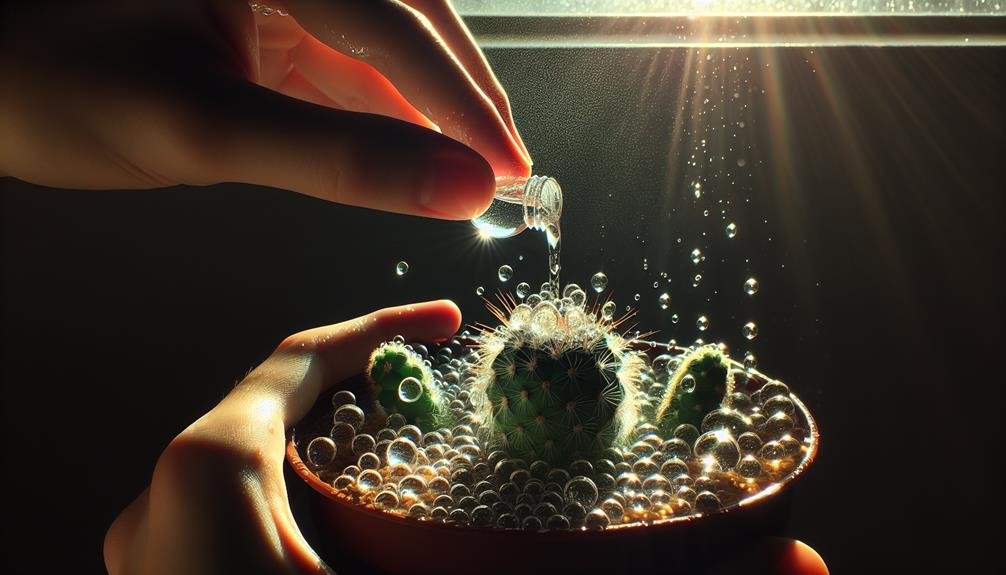
When it comes to watering your indoor cacti, remember that not all thorns are created equal. Understanding the unique watering requirements of your prickly companions is crucial for their survival.
As you navigate the delicate balance of moisture and aridity, you may find yourself pondering the mysteries of cactus care. But fear not, for with the right knowledge and techniques, you can transform your watering routine into a harmonious dance that nourishes your cacti to thrive.
Understanding Your Cactus's Watering Needs
To properly care for your indoor cactus, you must understand its specific watering needs. Cacti are known for their ability to thrive in arid conditions, requiring minimal water compared to other plants. Overwatering is one of the most common mistakes made by indoor cactus owners, as it can lead to root rot and ultimately harm the plant.
Understanding the type of cactus you have is crucial in determining its watering requirements. Desert cacti, like the Saguaro or Barrel cactus, prefer infrequent but deep waterings, allowing the soil to dry out completely between watering sessions. On the other hand, jungle cacti such as the Christmas cactus require more frequent watering but in smaller amounts.
In general, it's best to underwater rather than overwater your indoor cactus. Remember, when in doubt, it's always safer to water less than to risk overwatering. By grasping your cactus's specific watering needs, you can ensure a healthy and thriving plant in your indoor space.
Choosing the Right Watering Schedule
Understanding your cactus's specific watering needs will guide you in establishing the appropriate watering schedule for your indoor plant. Since cacti are adapted to survive in arid conditions, they don't require frequent watering like other houseplants. A general rule of thumb is to water your indoor cactus only when the top inch of the soil is completely dry. To determine this, you can use a moisture meter or simply stick your finger into the soil to feel its dryness.
The frequency of watering will vary depending on factors such as the cactus species, the pot size, the soil type, and the environmental conditions in your home. On average, indoor cacti typically need watering every 2-4 weeks during the growing season, which is usually spring and summer. During the dormant season in fall and winter, you can reduce the frequency to every 4-6 weeks. Remember, it's better to underwater than overwater your cactus to prevent root rot and other issues. Adjust your watering schedule based on your cactus's individual needs and observe how it responds to find the perfect balance.
Mastering Proper Watering Techniques
Enhance your indoor cactus care by mastering precise watering techniques that align with its unique needs. Proper watering is crucial for the health of your indoor cactus. To master this, ensure you water your cactus thoroughly but infrequently. When watering, make sure to saturate the soil completely, allowing excess water to drain out of the pot's bottom. This helps prevent waterlogging, a common issue that can lead to root rot.
Another essential aspect of proper watering is understanding your cactus's specific requirements. Different cactus species have varying needs when it comes to water. Research the specific type of cactus you have to determine how much water it requires and adjust your watering schedule accordingly. Remember, it's better to underwater your cactus than to overwater it, as cacti are more tolerant of drought than excess moisture.
Recognizing Signs of Overwatering and Underwatering
Avoiding the common mistakes of overwatering and underwatering starts with recognizing the subtle signs your indoor cactus may exhibit. One key indicator of overwatering is yellowing or translucent skin on the cactus. If you notice mushy or discolored areas, it might be a sign that you're watering your cactus too much. On the other hand, underwatering can lead to shriveled or wrinkled skin on the cactus. When the skin looks dry and puckered, it's time to give your cactus a good drink.

Another sign of overwatering is a musty smell emanating from the soil. If you detect this odor, you might be watering your cactus excessively. Underwatered cacti, on the other hand, may start dropping their spines or have dry, brittle spines. Keep an eye out for these signs to adjust your watering habits accordingly. Remember, finding the right balance is crucial for the health of your indoor cactus.
Expert Tips for Successful Cactus Watering
To water your indoor cactus effectively, adjust your watering schedule based on its specific needs and environmental conditions. Start by understanding the type of cactus you have – desert cacti like less frequent watering compared to jungle cacti. Check the soil moisture level by sticking your finger in the soil; only water when the top inch is dry.
Ensure proper drainage by using pots with drainage holes to prevent waterlogging. During the growing season, typically spring and summer, water more frequently but reduce watering in the dormant period. Use room temperature water to avoid shocking the roots. Consider factors like humidity levels and sunlight exposure, as these can affect your cactus's water requirements.
Frequently Asked Questions
Can I Use Distilled Water to Water My Indoor Cactus?
You can definitely use distilled water to water your indoor cactus. It's a good choice since distilled water lacks minerals that can harm your cactus.
Remember to water your cactus sparingly and ensure the soil dries out between waterings. Overwatering can be harmful to your cactus, so using distilled water can help maintain a healthy balance for your plant.
Is It Okay to Water My Cactus With Ice Cubes?
Using ice cubes to water your cactus isn't recommended. Extreme temperature changes can shock the plant's roots, causing damage.
It's best to use room temperature water to keep your cactus healthy. Consistent watering habits are crucial for indoor cacti, so opt for a gentle and steady approach.
How Often Should I Clean My Cactus's Pot to Prevent Water Buildup?
To prevent water buildup and keep your cactus healthy, clean its pot regularly. Remove any excess water or debris that may accumulate at the bottom. This practice helps prevent root rot and ensures proper drainage.
Aim to clean the pot every few months or whenever you notice a buildup of minerals or algae. By maintaining a clean pot, you create a healthier environment for your indoor cactus to thrive.
Can I Use a Spray Bottle to Water My Cactus Instead of Pouring Water Directly Into the Soil?
Using a spray bottle to water your cactus is a great idea! It allows you to control the amount of water you're giving your plant and prevents overwatering. Plus, it helps you avoid getting water on the cactus itself, which can lead to rot.
Make sure to spray the soil directly and allow it to dry out completely between waterings. This method can be effective in keeping your cactus healthy and happy.
Should I Adjust My Watering Schedule During Different Seasons for My Indoor Cactus?
Adjust your watering schedule for indoor cacti according to the seasons.
During warmer months, when cacti are actively growing, increase watering frequency. In cooler months, when growth slows down, reduce watering to prevent root rot.
Monitor soil moisture levels regularly to determine when your cactus needs water. Remember, it's better to underwater than overwater.
Adapting your watering routine to the changing seasons will help keep your indoor cactus healthy and thriving.
Conclusion
In conclusion, mastering effective indoor cactus watering techniques is essential for keeping your plants healthy and thriving. By understanding your cactus's watering needs, choosing the right watering schedule, and using proper techniques, you can avoid common pitfalls like overwatering and underwatering.
Remember to monitor your cactus closely for signs of distress and make adjustments as needed. With these expert tips, you'll be well on your way to successful cactus care. Happy watering!


