
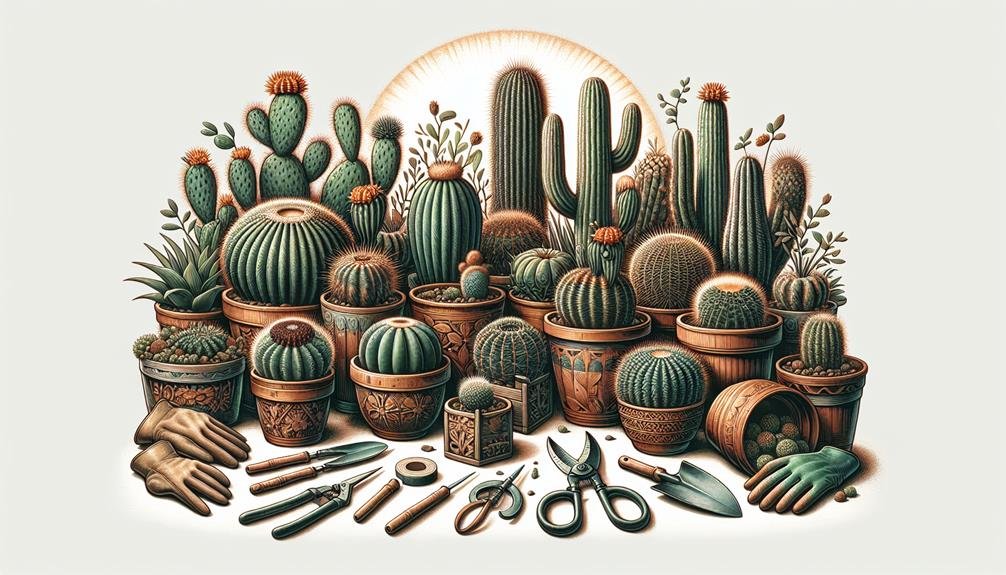
Did you know that overwatering is one of the leading causes of cactus diseases, affecting a significant percentage of cacti each year? To keep your prickly friends healthy and thriving, mastering the art of proper watering is crucial.
By understanding the signs of overwatering and implementing a few key practices, you can safeguard your cacti from falling victim to preventable diseases.
So, how can you ensure your cacti stay disease-free and vibrant year-round?
Proper Watering Techniques
To prevent cactus diseases, ensure you water your cacti sparingly and only when the soil is completely dry. Overwatering is a common mistake that can lead to root rot and other fungal infections. Cacti are adapted to survive in arid conditions, so they don't need frequent watering like other houseplants.
When you do water your cactus, make sure to water deeply until you see water coming out of the drainage holes at the bottom of the pot. This ensures that the entire root system receives moisture.
Another important aspect of proper watering is to avoid getting water on the cactus's body. Water sitting on the cactus can lead to rot or fungal issues. Instead, aim to water the soil directly at the base of the plant. Using a watering can with a narrow spout can help you target the water accurately.
Optimal Sunlight Exposure
For healthy cacti growth, ensure they receive the right amount of sunlight each day. Cacti thrive in bright, indirect sunlight, so it's important to place them in a location where they can get plenty of light. Aim for about 6-8 hours of sunlight daily. If your cactus isn't getting enough light, you may notice it stretching or leaning towards the light source. On the other hand, if it gets too much direct sunlight, it could get sunburned, leading to discolored patches on the skin.
To ensure optimal sunlight exposure, consider rotating your cactus periodically so all sides receive equal light distribution. If you're growing cacti indoors, placing them near a south or west-facing window is usually ideal. Outdoors, providing some light shade during the hottest parts of the day can be beneficial, especially for desert cacti.
Well-Draining Soil Selection
Ensure your cacti thrive by selecting well-draining soil that promotes healthy root growth and prevents waterlogged conditions. When choosing soil for your cacti, opt for a well-draining mix specifically designed for cacti and succulents. These mixes often contain ingredients like sand, perlite, or pumice to improve drainage and aeration, preventing excess moisture around the roots. Avoid using regular potting soil, which tends to retain water and can lead to root rot in cacti.
Well-draining soil is crucial for cacti as it mimics their natural desert environment, where water quickly drains away. The fast-draining nature of the soil helps prevent the roots from sitting in water, reducing the risk of fungal diseases and rot. Additionally, well-draining soil allows for better oxygenation of the roots, supporting overall plant health and growth.

Regular Inspection and Maintenance
Regularly inspecting and maintaining your cacti is essential for identifying early signs of disease or stress. Keep a close eye on your plants for any unusual changes in color, texture, or growth patterns. Check for spots, discoloration, or wilting sections, as these could indicate potential issues that need attention. Additionally, inspect the stems, roots, and soil for any signs of pests such as mealybugs or spider mites.
To maintain your cacti in optimal condition, ensure they're placed in an area with adequate sunlight and proper airflow. Avoid overwatering, as this can lead to root rot and other moisture-related problems. Instead, water your cacti sparingly, allowing the soil to dry out completely between watering sessions. Remove any debris or dead plant material from around the cacti to prevent the growth of mold or bacteria.
Regularly dust off your cacti's spines using a soft brush to keep them clean and free from dust buildup. By implementing these simple inspection and maintenance tasks, you can help your cacti stay healthy and disease-free.
Quarantine New Plants
When introducing new plants to your cacti collection, consider quarantining them to prevent the spread of diseases. Quarantining involves isolating the new plant from your existing ones for a period of time, typically around 2-3 weeks. This practice helps you observe the newcomer for any signs of diseases or pests before integrating it with your established cacti.
During the quarantine period, keep a close eye on the new plant for symptoms like discolored spots, unusual growths, or pest activity. It's crucial to water and care for the quarantined plant separately to avoid any potential contamination. Additionally, make sure to use separate tools, such as pruning shears or gloves, when handling the new plant to prevent the transfer of any pathogens.
Frequently Asked Questions
Can Cacti Get Diseases From Other Plants in the Vicinity, Even if They Are Not in Direct Contact?
Yes, cacti can get diseases from other plants in the vicinity, even if they aren't in direct contact. Airborne pathogens or pests can travel between plants and infect your cactus.
Be cautious and keep an eye on all nearby plants to prevent the spread of diseases. Regularly inspect your cactus for any signs of illness and take necessary precautions to keep it healthy.
Are There Any Natural Predators or Pests That Can Help Control Cactus Diseases?
Yes, some natural predators and pests can help control cactus diseases. Insects like ladybugs and predatory mites feed on harmful pests that may spread diseases to cacti.
These beneficial insects act as a natural form of pest control and can help maintain the health of your cactus plants. By encouraging these predators in your garden, you can create a more balanced ecosystem that supports the well-being of your cacti.
Can Over-Fertilizing Cacti Lead to an Increased Risk of Diseases?
Over-fertilizing cacti can definitely increase the risk of diseases. Too much fertilizer can disrupt the delicate balance in the plant's environment, making it more susceptible to pathogens.
How Do Environmental Factors, Such as Humidity Levels, Impact the Likelihood of Cactus Diseases?
In maintaining cacti, environmental factors like humidity levels play a crucial role in disease prevention. High humidity can create a moist environment that encourages fungal growth and diseases in cacti. Therefore, it's important to monitor and control humidity levels to reduce the risk of cactus diseases.
Proper ventilation and ensuring adequate airflow around your cacti can help mitigate the impact of high humidity on their health.
Are There Any Specific Warning Signs or Symptoms of Cactus Diseases That Are Often Overlooked by Beginners?
When you're new to caring for cacti, it's easy to miss the subtle signs of disease. Keep an eye out for changes in color, spots, or unusual growth patterns on your cactus.
These could be early warning signs of a problem that needs attention. Regularly inspect your plants to catch any issues early on, and remember that prevention is key to keeping your cacti healthy and thriving.
Conclusion
By following these expert tips for preventing cactus diseases, you can ensure the health and longevity of your beloved plants.
Remember to:
- Water them properly
- Provide them with optimal sunlight exposure
- Use well-draining soil
- Regularly inspect and maintain them
- Quarantine any new plants before introducing them to your collection
With these simple steps, you can keep your cacti thriving and disease-free for years to come.


