
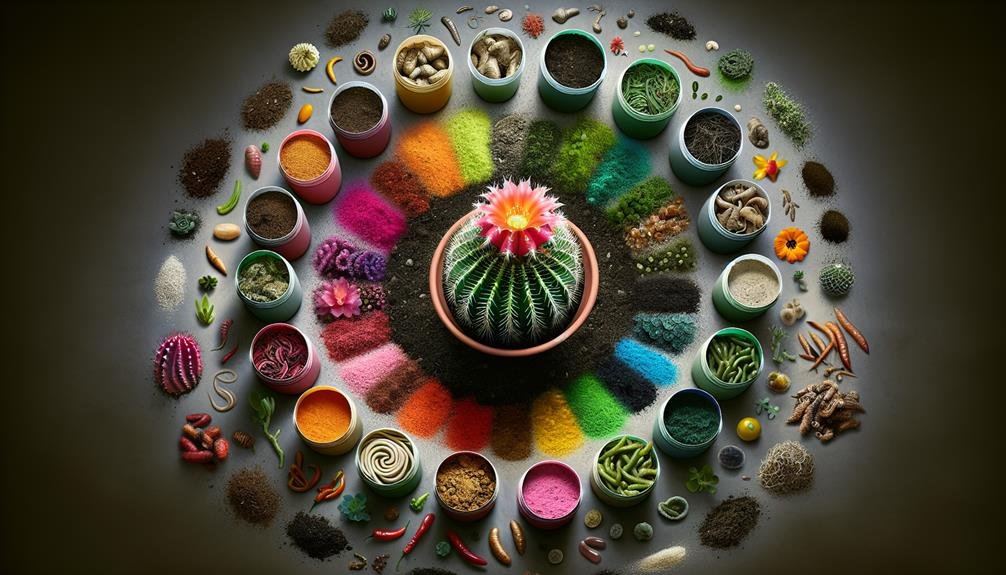
If you want your cactus to flourish like a well-tended garden, choosing the right organic fertilizer is key. But with so many options available, how do you decide which one is best suited for your prickly plant companion?
Let's explore the top organic fertilizers that can promote healthy cactus growth and delve into the specific benefits they offer.
From slow-release formulas to nutrient-rich blends, finding the perfect match for your cactus can make all the difference in its overall health and vibrancy.
Benefits of Using Organic Fertilizers
Organic fertilizers offer numerous advantages for cactus growth, such as providing essential nutrients in a natural and sustainable manner. When you choose organic fertilizers for your cactus, you're opting for a more environmentally friendly option. These fertilizers are derived from natural sources, reducing the risk of harmful chemicals leaching into the soil and water supply. By nourishing your cactus with organic fertilizers, you're promoting healthier soil ecosystems, which in turn support the overall well-being of your plant.
Furthermore, organic fertilizers release nutrients slowly, ensuring a steady and balanced supply for your cactus over time. This gradual nutrient release mimics the natural process of nutrient breakdown in the soil, allowing your cactus to absorb what it needs when it needs it. Unlike synthetic fertilizers that can cause nutrient imbalances and harm the environment, organic fertilizers work in harmony with nature to support optimal cactus growth.
In addition, organic fertilizers improve soil structure and promote beneficial microbial activity, creating a thriving environment for your cactus roots to flourish. When you prioritize using organic fertilizers, you aren't only nurturing your cactus but also contributing to a more sustainable and eco-friendly gardening approach.
Top Organic Fertilizers for Cactus
To ensure optimal growth for your cactus, consider incorporating top organic fertilizers that specifically cater to its nutrient needs. Organic fertilizers such as worm castings are rich in beneficial microorganisms that help break down nutrients for easier absorption by your cactus.
Bat guano is another excellent organic fertilizer option, providing a balanced mix of essential nutrients like nitrogen, phosphorus, and potassium. Additionally, seaweed extract offers a natural source of potassium, which can promote strong root development and overall plant health.
Compost tea is a versatile organic fertilizer that not only nourishes your cactus but also enhances soil quality by introducing beneficial bacteria and fungi. Lastly, fish emulsion is a potent organic fertilizer that delivers a quick nutrient boost to support your cactus's growth.
How to Apply Organic Fertilizers
For effective application of organic fertilizers to your cactus, consider the following simple steps. Begin by choosing a balanced organic fertilizer specifically formulated for cacti, ensuring it has the right nutrients in the correct proportions.

Before applying the fertilizer, make sure your cactus is well-watered to prevent root burn. During the active growing season in spring and summer, feed your cactus with the organic fertilizer every four to six weeks. Reduce the frequency to every eight weeks during the dormant period in fall and winter.
Dilute the organic fertilizer to half or a quarter of the recommended strength to avoid over-fertilizing, which can harm your cactus. Apply the diluted fertilizer directly to the soil around the base of the cactus, avoiding contact with the plant itself. Water the cactus thoroughly after fertilizing to help the nutrients penetrate the soil and reach the roots.
Following these steps will support healthy growth and vibrant blooms for your cactus.
Organic Vs. Synthetic Fertilizers
Consider the benefits and differences between using organic and synthetic fertilizers for your cactus growth. Organic fertilizers are derived from natural sources like compost, manure, or bone meal. They release nutrients slowly, feeding your cactus over time and improving soil structure. This can lead to healthier root systems and increased drought tolerance. Additionally, organic fertilizers promote beneficial microbial activity in the soil, aiding in nutrient absorption.
On the other hand, synthetic fertilizers are manufactured using chemical compounds. They provide an immediate nutrient boost to your cactus but can lead to a build-up of salts in the soil over time, potentially causing root burn if not flushed out properly. Synthetic fertilizers may also disrupt the balance of microorganisms in the soil, impacting long-term soil health.
When deciding between organic and synthetic fertilizers for your cactus, consider your watering routine, soil composition, and the specific needs of your plants. Organic fertilizers offer slow and steady nourishment, while synthetic fertilizers provide quick results but require careful application to prevent overfeeding. Choose the option that aligns best with your gardening style and goals for healthy cactus growth.
Tips for Maximizing Cactus Growth
Maximize your cactus growth by adjusting sunlight exposure based on seasonal changes. Cacti thrive in bright light but need protection from intense midday sun, especially during hot summer months. In spring and fall, provide your cactus with direct sunlight for 6-8 hours a day. However, during scorching summer days, it's best to shield your cactus from direct sunlight during the peak hours and gradually increase exposure as the weather cools.
Additionally, proper watering is crucial for maximizing cactus growth. Water your cactus deeply but infrequently, allowing the soil to dry out completely between waterings. During the dormant winter period, reduce watering to prevent root rot. To further boost growth, feed your cactus with a balanced organic fertilizer once a month during the growing season.
Regularly inspect your cactus for signs of pests or diseases. Early detection and treatment can prevent stunted growth and ensure the overall health of your plant. By following these simple tips, you can promote healthy and vigorous growth in your cactus.
Frequently Asked Questions
Can Organic Fertilizers Attract Pests or Insects to My Cactus Plants?
Organic fertilizers can indeed attract pests or insects to your cactus plants. These natural fertilizers, while beneficial for plant growth, can also be appealing to unwanted visitors.
To minimize this risk, ensure you're using high-quality organic fertilizers and monitor your plants regularly for any signs of pest infestation. Implementing preventive measures, such as proper drainage and plant spacing, can also help in keeping pests at bay.
Are There Any Specific Organic Fertilizers That Are Better Suited for Indoor Cactus Plants Versus Outdoor Cactus Plants?
When choosing organic fertilizers for your cactus plants, consider the specific needs of indoor versus outdoor plants.
Indoor cacti may benefit from a more balanced fertilizer mix to prevent over-fertilization in limited soil space.
Outdoor cacti might require a slower-release fertilizer to accommodate their larger root systems and exposure to natural elements.
Tailoring your fertilizer choice to your cactus's environment can help ensure healthy growth without attracting pests.
How Often Should Organic Fertilizers Be Applied to Cactus Plants for Optimal Growth?
For optimal growth, apply organic fertilizers to your cactus plants every 4-6 weeks during the growing season. Make sure to follow the instructions on the fertilizer packaging and avoid over-fertilizing, as this can harm your plants.
Always check the soil moisture before fertilizing and adjust the frequency based on your cactus's needs. By providing regular but not excessive fertilization, you can promote healthy growth and vibrant blooms in your cactus plants.
Can Organic Fertilizers Be Harmful to Other Plants or Soil if Used in the Same Garden or Potting Area as Cactus Plants?
When using organic fertilizers in the same garden or potting area as cactus plants, be cautious of potential harm to other plants or soil. Some organic fertilizers may contain ingredients that could be detrimental to certain plant varieties or alter the soil pH.
It's essential to research the specific needs of all plants in your garden to ensure compatibility with the chosen fertilizer. Properly understanding the ingredients and their effects will help maintain a healthy and thriving garden.
Are There Any Organic Fertilizers That Are Specifically Designed to Promote Flowering in Cactus Plants?
When looking to promote flowering in cactus plants, seek out specialized organic fertilizers. These products are designed to provide the essential nutrients that encourage blooming in your cacti.
By using these targeted fertilizers, you can support the healthy growth and development of your cactus flowers.
Remember to follow the instructions on the product packaging for best results in promoting vibrant blooms on your cactus plants.
Conclusion
Now that you have learned about the benefits of using organic fertilizers for your cactus, it's time to apply them to promote healthy growth.
Remember to choose the right organic fertilizer for your cactus, follow the instructions for application, and watch your plant thrive.
Say goodbye to synthetic fertilizers and embrace the natural way to nourish your cactus for optimal results.
Happy gardening!


