
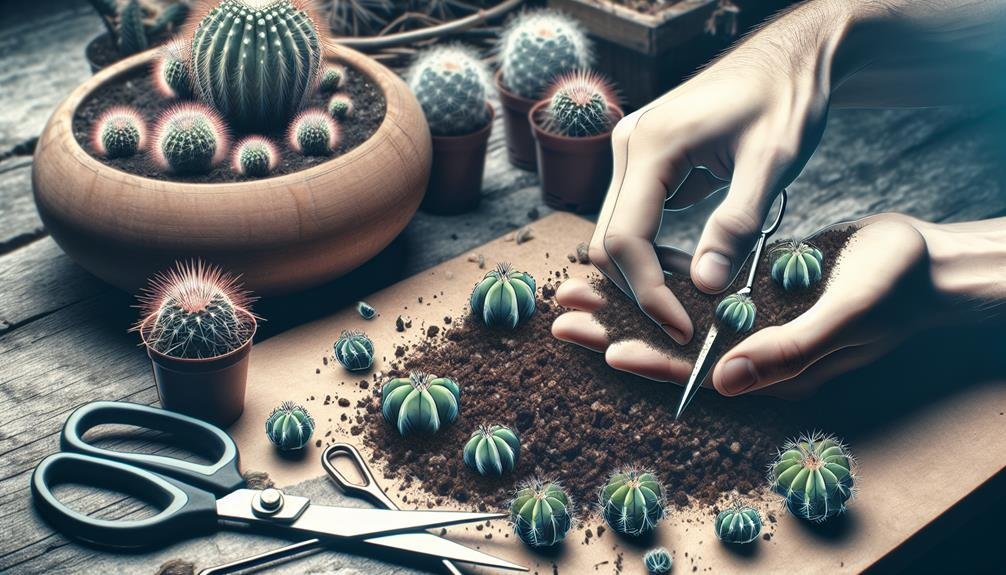
You may think that cactus propagation is a daunting task, especially if you're new to gardening, but fear not – it's easier than you think.
Ensuring successful cactus propagation at home requires attention to detail and the right techniques. From selecting the appropriate propagation method to creating the ideal environment for growth, each step plays a crucial role in the process.
By understanding these key components, you can increase your chances of cactus propagation success and witness the beauty of new growth in your collection.
Choosing the Right Propagation Method
When propagating your cactus, choose the right method based on the plant's characteristics and your preferences. If your cactus has offsets or pups growing from the base, propagation through division is a great option. Carefully separate these offsets from the main plant using a clean, sharp knife. Ensure the offsets have roots before planting them in a suitable medium.
For cacti that produce pups on their stems, such as the prickly pear cactus, you can propagate them by cutting these stems into sections and allowing the cuts to callus before planting them in a well-draining soil mix. This method works well for cacti with fleshy stems and branches.
If your cactus doesn't produce offsets or stem pups, you can propagate it through cuttings. Take a clean cutting from a healthy part of the plant, allow it to dry and callus, then plant it in a suitable medium to root. This method is suitable for many types of cacti that don't naturally produce offsets.
Preparing the Propagation Medium
To prepare the propagation medium for your cactus, gather a well-draining soil mix suitable for cacti propagation. Look for a mix specifically designed for succulents or cacti at your local garden center. You can also create your mix by combining equal parts of potting soil, sand, and perlite for optimal drainage. Make sure the soil is dry before using it to prevent excess moisture retention, which can lead to root rot.
Before filling your propagation containers with the soil mix, ensure they have drainage holes at the bottom to prevent waterlogging. It's crucial for the roots to breathe and avoid sitting in water for extended periods. Fill the containers with the soil mix, leaving some space at the top for placing the cactus cuttings.
Taking Cactus Cuttings Correctly
After preparing the propagation medium for your cactus, the next step is to focus on taking cactus cuttings correctly. When selecting a cutting, opt for a healthy stem segment that's free from blemishes or signs of disease. To ensure a successful propagation, use a sharp, sterilized knife to make a clean cut.
It's crucial to allow the cuttings to callus over before planting them in the propagation medium. This process helps prevent rotting and promotes healthy root development. Remember to let the cuttings sit in a shaded area for a few days until the cut end has dried and callused.

Once callused, plant the cuttings in the prepared propagation medium, ensuring they're inserted deep enough to stand upright. Mist the soil occasionally to maintain moisture levels without overwatering. With proper care and attention, your cactus cuttings will soon develop roots and grow into new thriving plants.
Sowing Cactus Seeds Successfully
Consider selecting healthy cactus seeds for successful propagation, ensuring they're free from any damage or defects.
To sow cactus seeds successfully, start by preparing a well-draining soil mix using a combination of sand, perlite, and potting soil. Fill a shallow container with this mix, leaving some space at the top. Gently press the seeds onto the soil surface without burying them too deep.
Mist the seeds lightly with water and cover the container with a clear plastic lid to create a mini greenhouse effect. Place the container in a warm, bright location, but away from direct sunlight. Remember to keep the soil slightly moist, not soggy, by misting it occasionally.
Germination times may vary depending on the cactus species, so be patient. Once the seeds have sprouted, gradually remove the plastic lid to acclimatize the seedlings to normal humidity levels. With proper care and patience, you can successfully sow cactus seeds at home for propagation.
Providing Optimal Growing Conditions
For optimal growth, ensure your cactus seedlings are placed in a well-ventilated area with indirect sunlight. Cacti thrive in environments with good air circulation and bright, indirect light. Direct sunlight can scorch the delicate seedlings, so it's essential to shield them from harsh rays. A south-facing window with sheer curtains or a spot with filtered sunlight works best.
Maintain a consistent temperature around your cactus seedlings. They prefer warmth but can withstand cooler nights. Aim for temperatures between 65-75°F (18-24°C) during the day and slightly cooler at night. Avoid sudden temperature fluctuations, as these can stress the seedlings.
Proper watering is crucial for cactus growth. Allow the soil to dry out between waterings to prevent root rot. Use a well-draining cactus mix and pots with drainage holes to avoid waterlogging. Overwatering is a common cause of cactus demise, so always err on the side of underwatering rather than overwatering.
Frequently Asked Questions
How Can I Tell if My Cactus Cutting or Seed Is Infected With Pests or Diseases?
To check if your cactus cutting or seed is infected, examine closely for any signs of pests or diseases. Look for spots, discoloration, or unusual growth patterns. If you notice any abnormalities, isolate the affected plant to prevent spreading.
Regularly inspect your cacti to catch any issues early on. Proper care and monitoring will help keep your plants healthy and thriving.
Can I Propagate Different Species of Cacti Together in the Same Pot or Tray?
Yes, you can propagate different species of cacti together in the same pot or tray.
However, it's important to consider the specific needs of each species regarding water, light, and soil.
Make sure to research each type of cactus to ensure they're compatible in terms of growth requirements.
Are There Any Specific Tools or Equipment I Need for Cactus Propagation?
When propagating cacti, specific tools can make the process easier. You'll need sharp scissors or pruning shears for cutting segments, a well-draining potting mix, and small pots for individual plants. A rooting hormone can also help stimulate root growth.
Additionally, having a spray bottle for misting and a sunny location for your cuttings to root are beneficial. These tools will set you up for success in cactus propagation.
How Long Does It Typically Take for Cactus Cuttings or Seeds to Root and Start Growing?
Typically, cactus cuttings or seeds can take a few weeks to a few months to root and begin growing. The exact timeline can vary depending on the type of cactus, environmental conditions, and care provided.
It's essential to be patient and consistent in your efforts to support the rooting and growth process. Regularly check on your cactus propagation, ensuring it has the right conditions for successful development.
Can I Use Tap Water for Watering My Propagated Cacti, or Should I Use a Specific Type of Water?
You should avoid using tap water for watering your propagated cacti. Tap water often contains minerals and chemicals that can harm your cacti over time.
It's best to use distilled or rainwater for watering, as they're free of harmful substances.
Conclusion
In conclusion, by choosing the right propagation method, preparing the medium properly, taking cuttings correctly, sowing seeds successfully, and providing optimal growing conditions, you can increase your chances of cactus propagation success.
With a little care and attention to detail, you can enjoy watching your cactus plants thrive and multiply in your home.
Happy propagating!


