
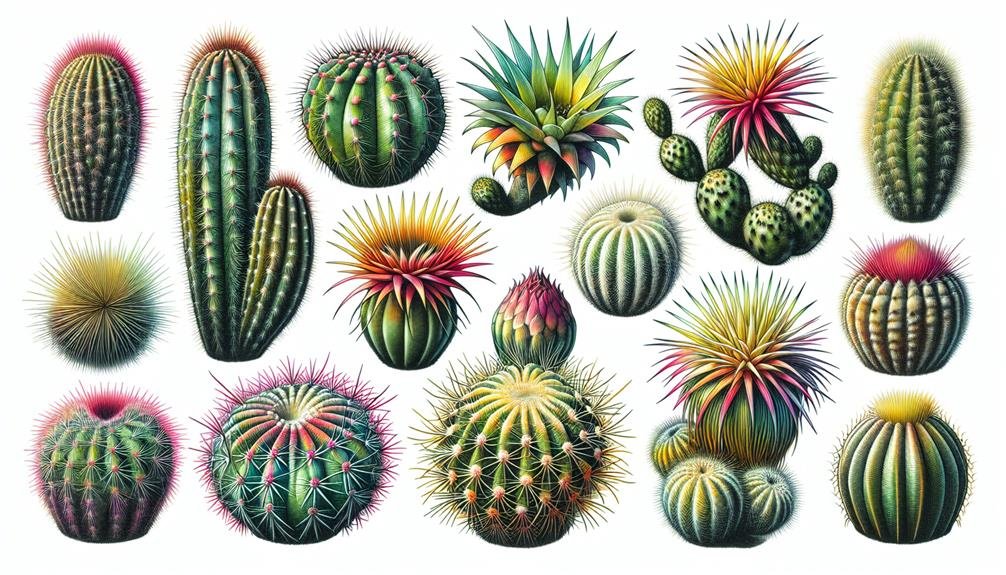
You might be surprised to learn that cactus spines come in an astonishing array of shapes and sizes, each serving a unique purpose.
From the towering saguaros to the petite prickly pears, the diversity of cactus spines is a fascinating subject worth exploring further.
As you ponder the significance of these varied structures, you'll uncover a world where form meets function in unexpected ways, shedding light on the intricate adaptations that have allowed cacti to thrive in some of the harshest environments on Earth.
Anatomy of Cactus Spines
Have you ever wondered what makes up the structure of cactus spines? Cactus spines aren't just simple thorns; they're fascinating structures with complex anatomy designed for specific purposes. These spines are modified leaves or areoles, which are small, round, cushion-like structures on the cactus. The outermost layer of cactus spines is covered by a tough, waxy cuticle that helps reduce water loss and protects the inner tissues from desiccation.
Underneath the protective cuticle, cactus spines have a dense network of vascular tissues that facilitate the transport of nutrients and water. This network of vessels also helps in regulating the temperature of the spines and the cactus itself by enabling heat exchange with the surrounding environment. Additionally, the vascular tissues provide structural support, allowing the spines to withstand environmental pressures such as wind and physical contact.
The inner core of cactus spines is composed of a fibrous material that gives them strength and flexibility. This fibrous core, made up of cellulose and lignin, allows the spines to bend without breaking, making them resilient against bending forces. Next time you encounter a cactus, take a moment to appreciate the intricate anatomy of its spines that's essential for the survival of these remarkable desert plants.
Evolutionary Adaptations in Spines
The evolutionary adaptations in cactus spines have enabled these structures to thrive in harsh desert environments. Over time, cacti have developed a remarkable array of spine shapes, sizes, and arrangements to suit their specific ecological niches. One key adaptation is the reduction of leaves into spines, which helps cacti minimize water loss through transpiration. The spines also act as a defense mechanism against herbivores, deterring animals from consuming the precious water-storing tissues of the cactus.
Moreover, the coloration of spines can play a role in reflecting excess sunlight to prevent overheating or in attracting pollinators to the flowers of the cactus. The spines' ability to shed heat quickly at night helps prevent frost damage in colder desert regions. Additionally, some cacti have barbed spines that easily attach to passing animals, aiding in seed dispersal. These evolutionary adaptations highlight the remarkable ways in which cacti have evolved to not only survive but thrive in some of the harshest environments on Earth.
Role of Spines in Cactus Survival
Exploring the multifaceted role of spines in cactus survival reveals their crucial function in adapting to harsh desert conditions. Cactus spines serve as a defense mechanism against herbivores, preventing them from feeding on the water-storing tissues of the cactus. By deterring animals from approaching, spines help cacti conserve precious water in their arid environment.
Additionally, spines provide shade to the cactus by creating a microclimate that reduces water loss through transpiration. This shade also helps regulate the cactus's internal temperature, preventing it from overheating in the scorching desert sun.

Moreover, cactus spines play a vital role in protecting the plant from intense sunlight and UV radiation. The spines act as a shield, reducing the cactus's exposure to harmful rays that could otherwise damage its tissues. By minimizing water loss, regulating temperature, and providing protection, spines are essential adaptations that enable cacti to thrive in some of the world's harshest environments.
Diversity in Spine Appearance
Amidst the vast array of cactus species, the diversity in spine appearance is a striking feature that captivates observers. Cactus spines come in a plethora of shapes, sizes, colors, and textures, reflecting the adaptability of these plants to their environments. Some cacti boast long, thin spines that resemble delicate needles, while others flaunt short, stout spines that form dense clusters. The colors of cactus spines vary widely, ranging from vibrant reds and yellows to earthy browns and greens, adding a visual spectacle to arid landscapes.
In addition to their appearance, cactus spines can also differ in their texture. Some spines are soft and flexible, providing protection without causing harm, while others are rigid and sharp, serving as formidable deterrents to potential threats. The diversity in spine appearance not only contributes to the aesthetic appeal of cacti but also plays a crucial role in their survival strategies. These adaptations showcase the ingenuity of nature in creating a wide range of defense mechanisms tailored to specific environments and challenges.
Human Uses of Cactus Spines
Diving into the practical realm, cactus spines find a range of human uses beyond their natural beauty and defensive capabilities. One common application is their utilization in traditional crafts and artwork. Indigenous communities have long incorporated cactus spines into intricate designs on pottery, baskets, and textiles, adding a unique touch to their creations.
In addition to artistry, cactus spines have practical uses in medicine. Some traditional healing practices involve using cactus spines to extract splinters or foreign objects from the skin due to their fine and sharp tips. Moreover, certain cultures believe in the medicinal properties of cactus spines when properly prepared and applied.
Furthermore, cactus spines have found their way into modern technology. Scientists have studied their structure and composition to develop materials with enhanced durability and flexibility, mimicking the properties of these natural structures. From art to medicine to cutting-edge innovations, the diverse applications of cactus spines demonstrate their significance beyond their role in the plant kingdom.
Frequently Asked Questions
How Do Cactus Spines Differ in Terms of Their Defense Mechanisms Against Herbivores?
Cactus spines vary in defense strategies against herbivores. Some spines are sharp and act as physical deterrents, while others have toxins that deter or harm animals.
Certain cacti use spines to create a barrier, making it harder for herbivores to reach the plant's succulent parts.
Are There Any Cactus Species That Have Spines With Unique Shapes or Structures Not Commonly Seen in Other Plants?
When you look at cactus species, you might be surprised by the unique shapes and structures of their spines. Some cacti have spines that differ significantly from other plants, showcasing a diverse array of forms.
These variations can range from long and straight to short and curved, providing not only protection against herbivores but also aiding in water conservation and temperature regulation.
Cacti truly stand out in the plant world with their distinctive spine structures.
Can Cactus Spines Vary in Color and What Purpose Does This Serve in Terms of Their Survival?
Cactus spines can indeed vary in color, serving a crucial role in their survival. The hues help cacti adapt to their environments by providing camouflage or warning signals to deter predators.
Different colors can also aid in temperature regulation, with lighter spines reflecting sunlight to prevent overheating. So, the diverse colors of cactus spines play a vital part in their ability to thrive in harsh conditions and protect themselves from harm.
Do Cactus Spines Have Any Medicinal or Therapeutic Properties That Have Been Traditionally Used by Indigenous Communities?
Cactus spines have been traditionally used by indigenous communities for their medicinal and therapeutic properties. These spines have been utilized in various remedies for treating ailments like inflammation, wounds, and even fever. Indigenous knowledge often values the healing properties of cactus spines and incorporates them into natural medicine practices.
Their historical use showcases the diverse ways in which cacti have contributed to human well-being beyond their physical protection role.
Are There Any Cactus Species That Have Lost Their Spines Throughout Evolution and What Implications Does This Have on Their Survival Strategies?
When examining cactus species that have lost their spines throughout evolution, it's essential to understand the implications on their survival strategies. These species may rely on alternative defense mechanisms or adaptations to thrive in their environments.
Conclusion
Overall, exploring the diversity of cactus spines reveals the fascinating adaptations and survival strategies of these unique plants.
From their varied shapes and sizes to their roles in protection and water conservation, cactus spines showcase the beauty and resilience of nature.
As you continue to observe different cactus species and their spines, you'll gain a deeper appreciation for the intricate ways in which these plants have evolved to thrive in challenging environments.


