
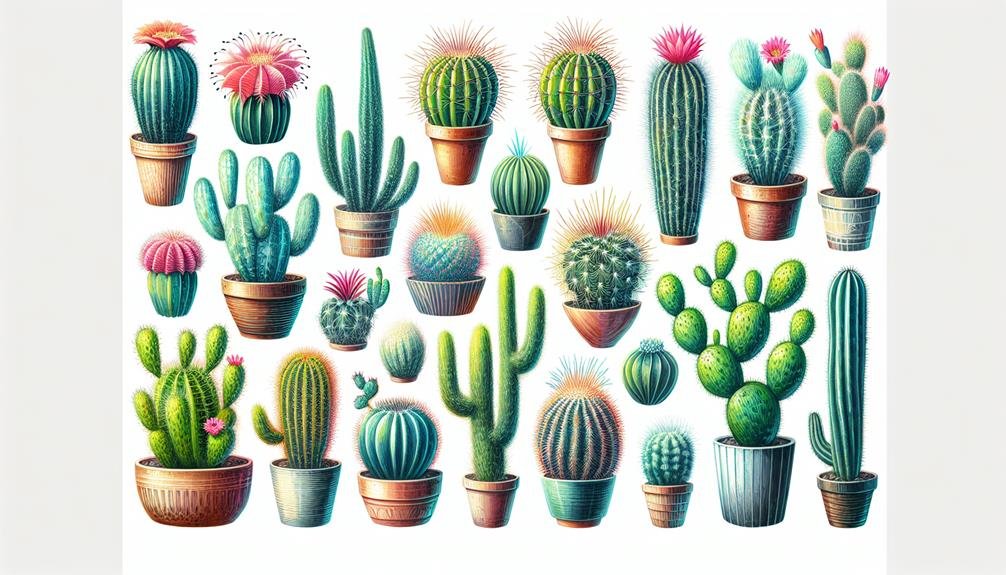
When it comes to cacti, their spines are like a diverse cast of characters in a play, each with a unique role to play.
Have you ever wondered why these desert dwellers showcase such a variety of spines?
The answer lies in a complex web of evolutionary strategies that have shaped these prickly plants over time.
From fending off thirsty predators to adapting to harsh climates, the reasons behind cacti's different spines are as intricate as the spines themselves.
Evolutionary Adaptations of Cactus Spines
Cactus spines have evolved over time to serve various functions, ranging from defense against herbivores to reducing water loss. The evolutionary adaptations of cactus spines showcase nature's ingenuity in ensuring the survival of these unique plants in harsh environments.
Initially, cactus spines primarily acted as a deterrent against herbivores looking for a quick meal. The sharp and often barbed spines made it difficult for animals to approach and feed on the cacti, providing a crucial defense mechanism. As time passed, cacti in different regions faced varying challenges, leading to the development of spines with specialized features.
Some spines evolved to provide shade and reduce water loss by creating a microclimate that helps regulate temperature and humidity around the cactus. Additionally, certain spines aid in trapping moisture from fog or dew, directing it towards the cactus roots for absorption. These adaptations highlight the remarkable versatility and effectiveness of cactus spines in ensuring the survival of these remarkable plants.
Role of Spines in Water Conservation
With their unique structures and functions, cactus spines play a crucial role in conserving water within these desert-adapted plants. These spines help cacti reduce water loss by providing shade, which lowers the plant's temperature and decreases transpiration. By creating a microclimate that traps moisture close to the plant's surface, spines help prevent water loss through evaporation. Additionally, the spines act as a barrier against air movement, reducing the rate of water loss through the plant's stomata.
Cactus spines also aid in water collection. During rare rainfall events in the desert, spines help direct water towards the cactus body, where it can be absorbed by the roots. Some cacti species have modified spines that are shaped like funnels, channeling water directly towards the plant's base. This efficient water collection mechanism allows cacti to make the most of infrequent precipitation in their arid environments.
In essence, cactus spines aren't just defensive structures; they're essential adaptations that enable these plants to thrive in water-scarce environments by maximizing water conservation and utilization.

Defense Mechanisms Against Herbivores
To deter herbivores, cacti employ a variety of defense mechanisms, ranging from physical barriers to chemical deterrents. One common defense strategy is the presence of spines. These sharp structures act as a physical barrier, making it difficult for animals to access the succulent tissues of the cactus. The spines also help reduce water loss by creating a microclimate that decreases air movement around the plant, thus lowering transpiration rates.
In addition to physical barriers, some cacti produce chemical compounds that deter herbivores. These chemicals can make the plant taste unpleasant or even be toxic to animals that attempt to feed on them. By incorporating these chemical deterrents into their defense mechanisms, cacti increase their chances of survival in harsh desert environments where resources are scarce.
Furthermore, certain cacti have evolved symbiotic relationships with ants. The cacti provide shelter and food sources for the ants, which in turn protect the cacti from herbivores. This mutually beneficial relationship enhances the cacti's defense mechanisms against potential threats.
Spine Variations for Climate Adaptation
Adapting to different climates, cacti display a diverse array of spine variations that aid in their survival and resilience. In hot and arid environments, cacti often have long, sharp spines that help reduce water loss by providing shade and trapping a layer of cool, moist air next to the plant. These spines also deter thirsty animals from feeding on the cactus and offer protection from intense sunlight. In contrast, cacti in colder climates tend to have shorter and thicker spines that act as insulation, reducing heat loss and protecting the plant from frostbite.
Additionally, some cacti species exhibit flexible spines that move with the wind, reducing water loss through transpiration by creating a boundary layer of still air around the plant. This adaptation helps cacti thrive in windy environments where water conservation is crucial for survival. By evolving different spine variations, cacti have effectively adapted to a wide range of climates, showcasing their remarkable ability to thrive in diverse environmental conditions.
Interactions With the Surrounding Environment
Interactions between cacti and their surrounding environment play a crucial role in their survival and adaptation. Cacti have evolved to interact with their environment in unique ways. The spines of a cactus, for example, not only protect it from predators but also help regulate its temperature. In hot, arid environments, the spines provide shade, reducing water loss through transpiration. Additionally, the spines can capture moisture from fog or dew, channeling it towards the cactus roots. This adaptation allows cacti to thrive in harsh desert conditions where water is scarce.
Furthermore, the shape and arrangement of a cactus's spines can influence its interactions with other organisms. Some spines are barbed or hooked, deterring animals from grazing on the plant. In contrast, certain cacti have spines that attract pollinators, aiding in reproduction. These intricate interactions between cacti and their environment showcase the remarkable adaptability of these plants in the face of challenging conditions.
Frequently Asked Questions
How Do Cacti Use Their Spines to Capture and Retain Water in Arid Environments?
When living in arid environments, cacti utilize their spines to capture and retain water. These spines act as a barrier against water loss through transpiration, reducing moisture evaporation.
Additionally, spines help create a microclimate around the cactus, trapping moisture in the air and preventing rapid dehydration. By strategically using their spines, cacti can better adapt to the harsh conditions of their environment and survive with limited water resources.
Can the Size and Shape of Cactus Spines Vary Within a Single Species?
Yes, within a single cactus species, the size and shape of spines can vary. This variation in spines helps cacti adapt to different environmental conditions.
Some cacti may have longer, thicker spines for protection against animals, while others may have shorter, finer spines to provide shade and reduce water loss.
These diverse spines serve specific purposes in helping cacti survive in arid habitats.
Do Cactus Spines Have Any Medicinal Properties or Traditional Uses?
Cactus spines have been used for various medicinal purposes and traditional practices. They can be utilized for extracting water in desert survival situations, as well as for creating tools like needles for sewing or tattooing.
Some cultures also believe in the healing properties of cactus spines for treating ailments such as arthritis or skin conditions. The diverse uses of cactus spines highlight their importance beyond just defense mechanisms.
Are There Any Species of Cacti That Have Evolved Without Spines?
Yes, some species of cacti have evolved without spines.
These spineless cacti have adapted to their environments in unique ways, using alternative methods for protection such as producing toxic compounds or using camouflage.
Despite lacking spines, these cacti have found ways to thrive in their habitats and continue to play important roles in their ecosystems.
How Do Cacti With Different Types of Spines Interact With Each Other in Their Native Habitats?
In their native habitats, cacti with different types of spines interact in various ways. Some species may compete for resources, like sunlight and water, while others could have symbiotic relationships where certain spines deter herbivores, benefiting neighboring cacti.
Understanding these interactions can provide insight into the complex dynamics of desert ecosystems and the role that cacti play in maintaining biodiversity.
Conclusion
So, next time you see a cactus with different types of spines, remember that each type serves a specific purpose.
From water conservation to defense mechanisms against herbivores, cacti have evolved to adapt to their environment.
By understanding the role of spines in a cactus's survival, you can appreciate the intricate ways in which nature has shaped these fascinating plants.


