
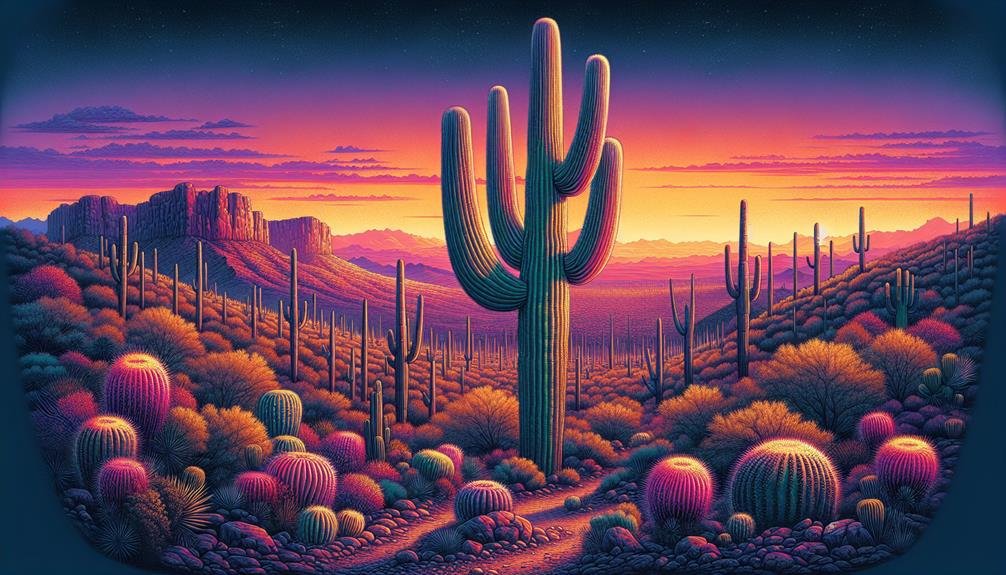
Imagine Arizona's desert flora as intricate tapestries woven by nature's skilled hand, each plant telling a story of resilience and adaptation in the harsh desert environment.
As you begin to explore the symbolic importance of these unique plants, you will uncover a rich tapestry of history, culture, mythology, and spirituality deeply intertwined with Arizona's desert landscape.
Stay tuned as we unravel the layers of meaning behind the iconic cacti, vibrant wildflowers, and hardy shrubs that populate this arid region, revealing their profound significance beyond mere botanical beauty.
Historical Significance of Desert Flora
Exploring the historical significance of Arizona's desert flora reveals a rich tapestry of adaptation and resilience. The desert plants in Arizona have survived for centuries, developing unique characteristics to thrive in arid conditions. Cacti, like the iconic Saguaro, have adapted by storing water in their thick stems to endure long periods of drought. Mesquite trees, with their deep roots, efficiently absorb moisture from the ground to withstand the harsh desert heat. These plants showcase a remarkable history of evolution and survival in a challenging environment.
The historical importance of Arizona's desert flora extends beyond adaptation. Native American tribes such as the Tohono O'odham and the Navajo have long relied on these plants for food, medicine, and materials. The prickly pear cactus, for example, provided sustenance in the form of its fruits, while the yucca plant was used for making baskets and sandals. Understanding the historical relationship between indigenous peoples and desert flora enriches our appreciation for the interconnectedness of nature and culture.
Cultural Symbolism in Arizona's Flora
The cultural significance of Arizona's desert flora goes beyond adaptation and history, delving into the symbolic meanings attached to these resilient plants. In Arizona, certain desert plants hold special cultural symbolism for the local communities. For example, the Saguaro cactus, with its towering presence and long lifespan, symbolizes strength, endurance, and protection. This iconic cactus is often used in art, jewelry, and architecture as a representation of the desert landscape and the resilience of the people who inhabit it.
Another culturally significant plant is the Ocotillo, known for its vibrant red flowers and long, spiny stems. The Ocotillo is seen as a symbol of vitality and adaptability, thriving in harsh desert conditions and blooming with life even in the driest of times. Many indigenous tribes in Arizona have traditional uses for the Ocotillo, utilizing its branches in ceremonies and medicinal practices. These symbolic connections to Arizona's desert flora highlight the deep cultural roots that are intertwined with the natural environment.
Mythological Connections to Desert Plants
With roots deeply embedded in ancient lore, Arizona's desert plants intertwine myth and reality in captivating ways. The iconic Saguaro cactus, with its towering presence and long lifespan, has been linked to various myths of the Native American tribes in the region. Legends speak of the Saguaro as a wise and protective figure, embodying the spirits of ancestors and offering guidance to those in need.
Similarly, the Ocotillo plant is associated with stories of resilience and adaptability due to its ability to thrive in harsh desert conditions. In mythological tales, the Ocotillo is often portrayed as a symbol of endurance and transformation, mirroring its remarkable ability to blossom with vibrant red flowers after periods of drought.
The Mesquite tree, known for its deep roots and nutritious pods, is revered in folklore for its nourishing qualities and symbolizes sustenance and strength. These mythological connections to Arizona's desert plants add depth to the region's cultural tapestry, highlighting the profound significance of these botanical wonders.

Spiritual Meanings of Iconic Cacti
Iconic cacti in Arizona's desert hold deep spiritual meanings that resonate through ancient traditions and modern interpretations. The Saguaro cactus, with its majestic stature and long lifespan, symbolizes endurance, strength, and the interconnectedness of all living beings. In Native American cultures, the Saguaro is revered as a wise elder offering protection and guidance to the community. Its arms reaching towards the sky are seen as a representation of spiritual awareness and the ability to transcend earthly limitations.
The Organ Pipe cactus, named for its multiple stems that resemble the pipes of an organ, is associated with harmony, balance, and healing. Some believe that meditating near an Organ Pipe cactus can help restore inner peace and align the body's energy centers. Its ability to thrive in harsh desert conditions serves as a reminder of resilience and adaptation in the face of adversity.
Environmental Impact and Conservation Efforts
Exploring the significance of Arizona's desert flora extends beyond spiritual meanings to understanding their environmental impact and ongoing conservation efforts. The unique ecosystem of the Arizona desert is home to a diverse array of plant species, many of which are specially adapted to survive in arid conditions. However, factors like urbanization, climate change, and invasive species pose significant threats to this delicate balance.
Conservation efforts play a crucial role in protecting Arizona's desert flora for future generations to appreciate and study. Organizations and government agencies work tirelessly to preserve native plant species, restore habitats, and raise awareness about the importance of desert ecosystems. By promoting sustainable practices and implementing protective measures, progress is being made to ensure the survival of iconic cacti, succulents, and wildflowers.
Individual actions also have a role to play in supporting the conservation of Arizona's desert flora. By respecting protected areas, avoiding illegal plant collection, and participating in local restoration projects, you can contribute to the preservation of these valuable natural resources. Together, we can safeguard the beauty and biodiversity of Arizona's desert landscape for years to come.
Frequently Asked Questions
How Do the Colors of Arizona's Desert Flora Reflect the State's Unique Landscape and Climate?
When you look at the colors of Arizona's desert flora, you'll notice how they capture the essence of the state's distinctive landscape and climate.
The vibrant hues of the plants reflect the harsh yet beautiful environment they thrive in.
From the deep greens of cacti to the fiery reds of wildflowers, each color tells a story of adaptation and resilience in the arid desert terrain.
Are There Any Lesser-Known Uses or Benefits of Specific Desert Plants in Arizona?
There are indeed lesser-known uses and benefits of specific desert plants in Arizona. Some plants like the brittlebush have been traditionally used by indigenous communities for medicinal purposes.
While others like the agave plant provide a sustainable source of material for making rope and baskets. Exploring the diverse flora of Arizona's deserts can reveal a treasure trove of practical and cultural significance that goes beyond their visual beauty.
What Role Do Desert Plants Play in Local Indigenous Communities' Traditional Practices and Rituals?
Desert plants hold significant roles in local indigenous communities' traditional practices and rituals. They're intertwined with spiritual beliefs, healing practices, and ceremonies.
These plants are revered for their symbolic meanings and are often used in rituals to connect with nature and ancestors. By incorporating desert flora into their traditions, indigenous communities maintain a strong bond with the land and its resources, passing down cultural knowledge through generations.
Are There Any Specific Rituals or Ceremonies That Involve Desert Flora in Arizona's Cultural History?
In Arizona's cultural history, specific rituals and ceremonies have indeed incorporated desert flora. These traditions reflect a deep connection to the land and its natural resources.
The use of desert plants in ceremonies highlights their significance in spiritual practices and cultural beliefs. Over time, these rituals have become integral to preserving the heritage and traditions of Arizona's diverse communities.
How Have Modern Developments and Urbanization Affected the Presence and Diversity of Desert Plants in Arizona?
Modern developments and urbanization in Arizona have significantly impacted the presence and diversity of desert plants. As cities expand, natural habitats shrink, leading to the destruction of native flora.
Construction, pollution, and altered water flow disrupt the delicate balance of desert ecosystems. Conservation efforts are crucial to preserving these plants and maintaining the biodiversity of Arizona's desert landscapes for future generations to enjoy.
Conclusion
Overall, the desert flora of Arizona holds immense symbolic importance, from its historical significance to its cultural symbolism and mythological connections.
The iconic cacti, in particular, carry spiritual meanings and have become emblematic of the region.
As efforts to conserve and protect these plants continue, their environmental impact remains crucial.
The desert flora not only shapes the landscape of Arizona but also serves as a powerful symbol of resilience, adaptation, and interconnectedness with nature.


