
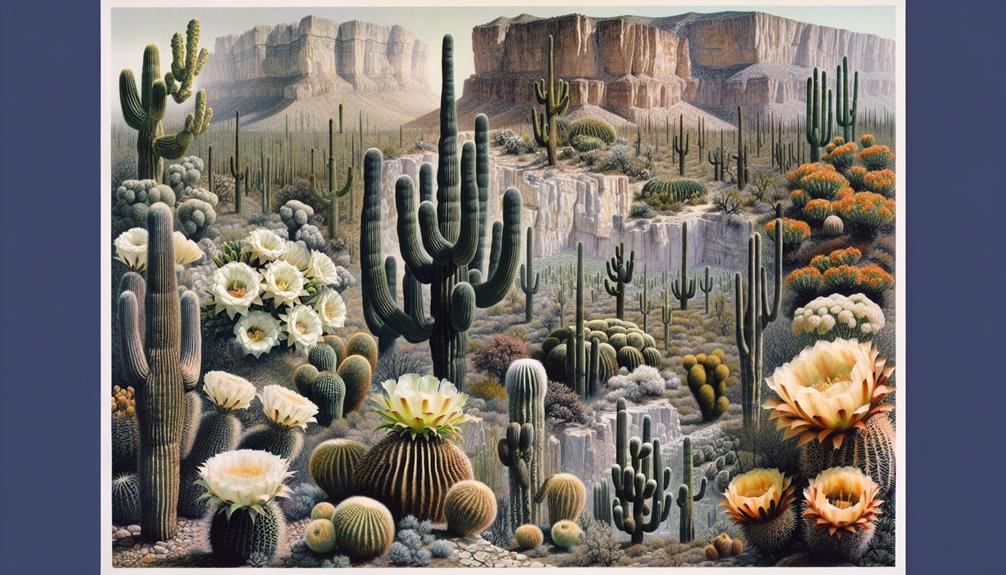
In North America, cacti have found themselves in some rather challenging environments, let's say. From the arid desert landscapes to some surprisingly unique habitats in Mexico, these plants have managed to adapt and thrive in conditions that may not seem very hospitable at first glance.
But have you ever wondered how these prickly succulents manage to survive and spread across the continent? There's an intricate web of factors influencing their distribution that might pique your curiosity.
Cacti Habitats in North America
Have you ever wondered where cacti thrive in North America? Well, you'll find these unique plants flourishing in a variety of habitats across the continent. From the deserts of the Southwest to the coastal regions of California, cacti have adapted to diverse environments.
In the arid regions of the Sonoran Desert, famous for its saguaro cacti reaching towering heights, these plants have evolved to conserve water and withstand the scorching sun.
Head further east to the Chihuahuan Desert, and you'll encounter prickly pear cacti dotting the landscape with their flat pads and vibrant blooms. These hardy plants have adapted to survive in harsh conditions, showcasing their resilience in the face of adversity.
Moving northward, cacti can even be found in more unexpected places like the high-altitude deserts of the Great Basin, where species like the Utah juniper cactus cling to life in rocky terrain.
Whether nestled among rocky outcrops or thriving in sandy soils, cacti have carved out their own niches in various habitats throughout North America, showcasing their ability to thrive in some of the continent's most challenging environments.
Desert Environments for Cacti
Exploring the desert environments where cacti thrive in North America reveals the remarkable adaptability of these plants in harsh conditions. Cacti have evolved unique features to survive in these arid regions, such as their ability to store water in their fleshy stems and their specialized root systems that efficiently absorb moisture from the soil. The hot days and cold nights of the desert pose challenges, but cacti have developed thick, waxy coatings on their stems to reduce water loss and have adapted their photosynthesis process to occur primarily at night to prevent excessive moisture evaporation.
In addition to their water-saving mechanisms, cacti have adapted to the sandy or rocky soils of the desert by developing shallow, widespread root systems that allow them to quickly absorb any available water. Their spines provide protection against predators and also help to create a microclimate around the plant, reducing water loss through transpiration. Overall, cacti have successfully carved out a niche in the harsh desert environments of North America through their remarkable adaptations.
Unique Cacti Habitats in Mexico
In Mexico, cacti thrive in unique habitats that showcase their remarkable adaptations to diverse environmental conditions. From the arid deserts of Baja California to the high-altitude grasslands of central Mexico, cacti have evolved to withstand extreme temperatures and scarce water sources.

One of the most intriguing cacti habitats in Mexico is the Tehuacán-Cuicatlán Valley, known as the 'Cactus Capital of the World.' This region boasts an incredible diversity of cactus species, with adaptations ranging from the iconic saguaro cactus to the diminutive Mammillaria.
The rugged terrain of the Sierra Madre Occidental provides another distinctive habitat for cacti, with species like the barrel cactus thriving in rocky outcrops and steep slopes. As you explore these unique habitats, you'll witness how cacti have adapted to survive in some of the harshest environments, making Mexico a treasure trove for cactus enthusiasts and researchers alike.
Distribution of Cacti Species
Mexico's diverse cacti habitats showcase a range of adaptations, leading to a varied distribution of cacti species across North America. The vast landscapes of the southwestern United States are home to numerous cacti species, with the iconic Saguaro cactus dominating the Sonoran Desert.
Moving northward, the prickly pear cactus thrives in the arid regions of the Great Plains and the Chihuahuan Desert. Along the West Coast, the coastal prickly pear cactus finds its niche in the sandy soils and mild climates.
As you venture into the high-altitude regions of the Rocky Mountains, you'll encounter the resilient pincushion cactus, adapted to survive harsh winters and short growing seasons. In the dry interior regions of the continent, the barrel cactus stands tall, storing water to endure the arid conditions.
Each of these cacti species has found its place in the diverse ecosystems of North America, showcasing the adaptability and resilience of these unique desert plants.
Factors Influencing Cacti Distribution
Cacti distribution across North America is influenced by a combination of environmental factors and ecological interactions. The harsh climatic conditions in certain regions, such as deserts and arid areas, create ideal habitats for cacti due to their ability to store water and withstand drought. Temperature variations play a crucial role in determining where specific cacti species can thrive, with some requiring extreme heat while others prefer milder climates. Soil composition also plays a significant part, as cacti often grow in well-draining soils that prevent waterlogging. Additionally, factors like altitude and sunlight exposure impact cacti distribution, with certain species thriving at higher elevations and in areas with ample sunlight.
Ecological interactions, including competition with other plant species for resources like water and nutrients, further shape cacti distribution patterns. The presence of herbivores that feed on cacti can also limit their distribution in certain areas. Understanding these complex interactions is essential for conservation efforts and managing cacti populations across North America.
Frequently Asked Questions
How Do Cacti Adapt to Extreme Weather Conditions in Their Habitats?
To survive extreme weather conditions, cacti have evolved remarkable adaptations. They store water in their thick stems to endure long periods of drought.
Their spines reduce water loss by providing shade and trapping moisture. Additionally, shallow but extensive root systems quickly absorb water during rare rainfalls.
These adaptations allow cacti to thrive in arid environments where other plants struggle to survive.
Are There Any Specific Cacti Species That Are Endangered or Threatened Due to Habitat Destruction?
When it comes to cacti species that are endangered or threatened due to habitat destruction, it's crucial to raise awareness and take action.
By understanding the impact of human activities on cacti habitats, you can play a role in conservation efforts.
Supporting initiatives that protect these vulnerable species and their environments is essential for their survival.
Your involvement can make a difference in preserving these unique plants for future generations.
Do Cacti Play a Significant Role in the Ecosystem of Their Habitats?
Cacti play a significant role in their habitats by providing food and shelter for various animals. Their unique characteristics, such as water storage abilities and spiky exteriors, help them thrive in arid environments.
Additionally, cacti contribute to the ecosystem by aiding in soil stabilization and preventing erosion.
How Do Wildfires Impact the Distribution of Cacti in North America?
Wildfires can have a profound impact on the distribution of cacti in North America. They can destroy cacti populations, leaving behind scorched earth that takes time to recover.
However, some cacti species have adapted to fire and can even benefit from it. They may resprout from the base or rely on seeds that require the heat of a fire to germinate, ultimately shaping the distribution patterns of cacti in fire-prone regions.
Are There Any Conservation Efforts in Place to Protect Cacti Habitats in Mexico?
To protect cacti habitats in Mexico, various conservation efforts are in place. These include:
- Establishing protected areas
- Implementing sustainable land management practices
- Raising awareness about the importance of preserving these unique ecosystems
Conclusion
Overall, the diverse habitats and distribution of cacti in North America showcase the adaptability and resilience of these unique plants. From the arid deserts of the Southwest to the tropical regions of Mexico, cacti have found ways to thrive in various environments.
Factors such as climate, soil conditions, and human impact play a role in shaping the distribution of cacti species across the continent.
Explore the beauty and importance of cacti in their natural habitats.


