
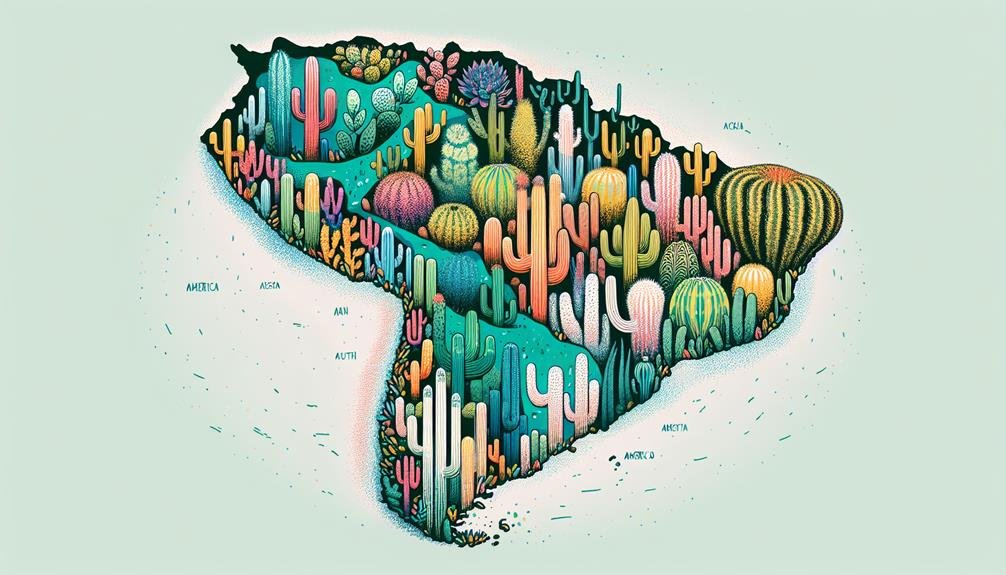
Surveying South America's sprawling landscapes, cacti have captivated researchers with their captivating diversity and resilience.
But did you know that the distribution of these prickly plants tells a tale of adaptation and change?
As you ponder the shifting sands of time, consider the intricate web of factors influencing cactus populations across the continent.
From historical trends to futuristic technologies, the journey of mapping South America's cactus distribution unveils a complex narrative waiting to be explored.
Evolution of Cactus Distribution Patterns
You can trace the evolution of cactus distribution patterns by examining historical records and modern mapping techniques. In the past, cacti were primarily found in specific regions due to natural barriers like mountains and deserts. However, as human activities such as agriculture and urbanization expanded, cacti began to spread to new areas. By analyzing historical data from explorers and botanists, researchers have been able to uncover how cactus habitats have shifted over time.
With advancements in mapping technology, we now have a clearer picture of how cactus distribution has changed. Satellite imagery and geographical information systems allow scientists to track cactus populations with precision. This has revealed interesting trends, such as certain species moving towards higher altitudes in response to climate change.
Impact of Climate Change on Cactus Habitats
Examining the shifting cactus distribution patterns over time, the impact of climate change on cactus habitats becomes increasingly evident through changes in species' ranges and adaptations to environmental shifts. As temperatures rise and precipitation patterns shift, cacti are facing challenges in their traditional habitats. Some species are migrating to higher altitudes or latitudes in search of suitable conditions, while others are struggling to survive in drier or warmer environments.
Climate change-induced events like prolonged droughts and more frequent extreme weather events are putting additional pressure on cactus populations. These resilient plants, known for their ability to thrive in arid conditions, are now forced to adapt at a faster pace than ever before. The rate at which these changes are occurring leaves little time for cactus species to evolve and adjust naturally.
Conservation efforts are crucial to protect these iconic plants and the ecosystems they support, as they face an uncertain future in the wake of rapid climate change.
Human Influence on Cactus Populations
In light of the changing landscape, cactus populations are experiencing significant impacts from human activities. As populations grow and urban areas expand, the natural habitats of cacti are increasingly encroached upon. Deforestation for agriculture, urban development, and illegal cactus trade are some of the primary threats faced by these iconic plants.

Overharvesting for ornamental purposes poses a severe risk to cactus populations. The demand for cacti in the landscaping and gardening industries has led to unsustainable extraction from the wild. This not only disrupts the natural balance but also jeopardizes the survival of various cactus species.
Furthermore, pollution from industrial activities and irresponsible tourism can harm cactus populations. Chemical pollutants and habitat destruction can have long-lasting detrimental effects on these plants, impacting their growth and reproduction capabilities.
It is crucial for conservation efforts to address these human-induced threats to cactus populations. Sustainable practices, strict regulations on cactus trade, habitat preservation, and raising awareness about the importance of cacti in the ecosystem are essential steps towards safeguarding these unique species for future generations.
Technological Advances in Mapping Cactus Distribution
Mapping cactus distribution has been revolutionized by recent technological advances. With the advent of satellite imagery and geographic information systems (GIS), scientists can now accurately map the distribution of cacti across South America. These tools provide high-resolution data that allow for detailed analysis of cactus habitats, population densities, and changes over time. By utilizing remote sensing technology, researchers can monitor vast areas efficiently, identifying areas where cacti thrive and areas where they may be at risk.
Furthermore, the use of drones has enhanced mapping capabilities by capturing images from difficult-to-reach locations, such as rugged terrains or dense forests. Drones equipped with specialized cameras can collect valuable data for studying cactus populations without disturbing the natural environment. This technology has significantly improved the precision and efficiency of cactus distribution mapping, enabling researchers to make informed decisions regarding conservation efforts and habitat protection. Embracing these technological advances ensures that we can better understand, monitor, and preserve the diverse cactus species found throughout South America.
Conservation Efforts to Protect Cactus Diversity
To safeguard the diverse cactus species in South America, conservation efforts must be prioritized and implemented effectively. Preservation initiatives such as establishing protected areas, enforcing anti-trafficking laws, and promoting sustainable land use practices are crucial in ensuring the survival of these unique plant species.
Protected areas play a vital role in safeguarding cactus habitats from human encroachment and unsustainable exploitation. By designating specific regions as conservation areas, governments can provide a safe haven for cacti to thrive and maintain their ecological balance.
Enforcing strict anti-trafficking laws is essential to combat illegal poaching and smuggling of cacti for commercial purposes. By cracking down on illicit trade activities, authorities can reduce the pressure on wild cactus populations and prevent further depletion of these valuable plants.
Additionally, promoting sustainable land use practices among local communities and landowners can help mitigate habitat destruction and fragmentation, allowing cacti to persist in their natural environments. Collaborative efforts between governments, conservation organizations, and local stakeholders are key to ensuring the long-term survival of South America's diverse cactus species. By working together to protect these iconic plants, we can preserve their biodiversity for future generations.
Frequently Asked Questions
How Do Cacti Adapt to Different Environmental Conditions in South America?
You'll notice that cacti adapt to various environmental conditions in South America by developing specialized features like succulent stems and spines to conserve water and deter predators.
These adaptations help cacti thrive in arid or semi-arid regions where water is scarce and temperatures are extreme.
Are There Any Specific Cactus Species That Are More Resilient to Climate Change Than Others?
Some cactus species are indeed more resilient to climate change than others. Factors like ability to store water, adapt to varying temperatures, and survive in arid conditions determine their resilience.
What Role Do Insects and Animals Play in Dispersing Cactus Seeds Across the Continent?
Insects and animals play a crucial role in dispersing cactus seeds across the continent. They help spread seeds to new areas through their movements, contributing to the distribution and survival of cactus species. This process is essential for maintaining biodiversity and ensuring the resilience of cacti populations in different environments.
Understanding the interactions between cacti, insects, and animals can provide valuable insights into ecosystem dynamics and conservation efforts.
How Do Cactus Populations in Urban Areas Differ From Those in More Remote Regions?
In urban areas, cactus populations often adapt to human presence, growing in parks and gardens. They may face challenges like pollution and limited space but can thrive with proper care.
In remote regions, cacti grow in their natural habitats, facing fewer disturbances but also fewer resources. These regions might have more diverse cactus species due to isolation.
Understanding these differences can help in conservation efforts and urban planning.
Are There Any Traditional Uses of Cacti by Indigenous Communities That Are Not Widely Known?
Are there any traditional uses of cacti by indigenous communities that aren't widely known?
Yes, many indigenous groups have been utilizing cacti for various purposes for centuries.
From medicinal remedies to spiritual ceremonies, these plants hold significant cultural value.
Exploring these lesser-known uses can provide insights into the deep connection between indigenous communities and their natural surroundings.
Conclusion
Overall, mapping South America's cactus distribution over time shows the evolving impact of climate change and human influence on these unique habitats. Conservation efforts are crucial to protect the diverse cactus populations and ensure their survival for future generations.
With advancements in technology, we've the tools to monitor and safeguard these vulnerable species. By understanding the history and current status of cactus distribution, we can work towards preserving their beauty and importance in our ecosystem.


