
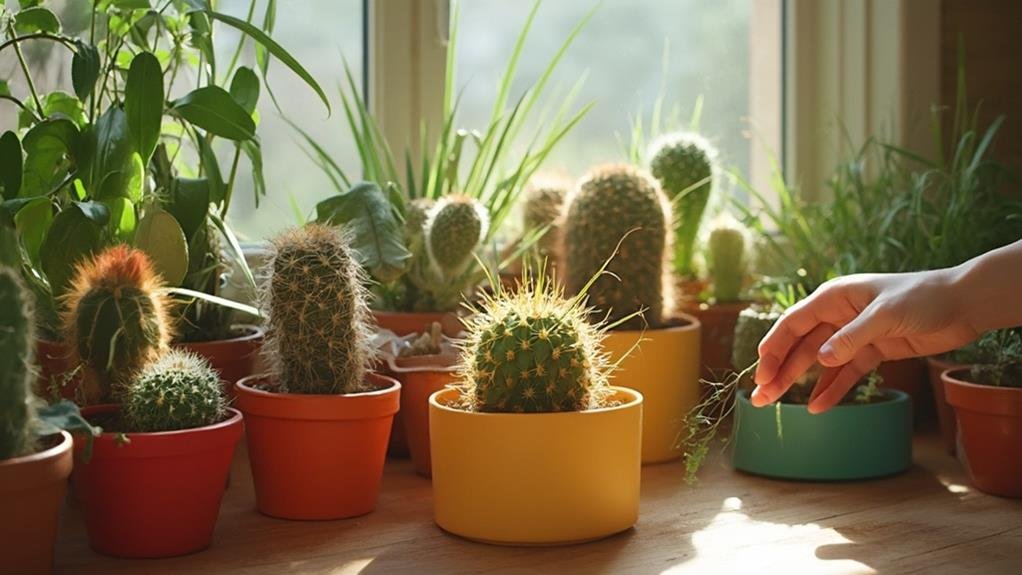
If you've ever wanted to expand your cacti collection without spending a cent, you're in for a treat. There's a surprisingly effective method that lets you multiply your plants using simple techniques that even beginners can master. You might think it requires special tools or extensive knowledge, but it's much more accessible than that. Imagine transforming your garden with unique varieties, all from your existing plants. Curious about how to get started? Let's explore the steps that will have you nurturing new cacti in no time.
Key Takeaways
- Start by taking healthy cuttings or offsets from your existing cacti to create new plants without spending money.
- Allow the cuttings to dry for a few days to form a callous, preventing rot when planted.
- Plant the calloused ends in a well-draining cactus mix and avoid overwatering to promote healthy growth.
- Connect with local plant enthusiasts for plant swaps to expand your collection at no cost.
- Educate yourself on different cacti care requirements to ensure successful propagation and thriving new plants.
Understanding Cacti Propagation
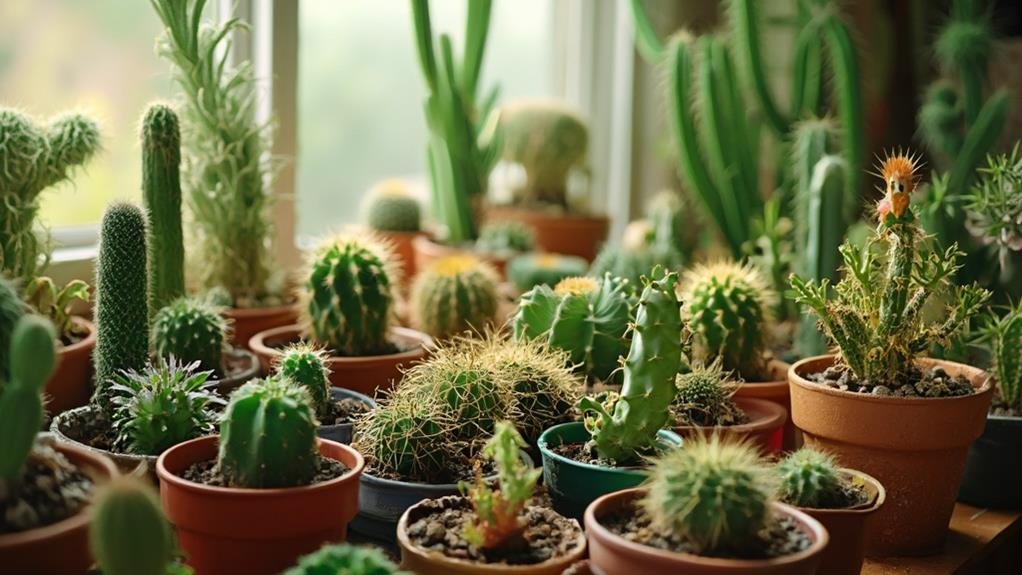
Propagating cacti can be a rewarding experience, offering a sense of accomplishment as you nurture new life from existing plants. Understanding the basics of cacti propagation is essential for anyone looking to share the joy of these unique plants.
You'll want to start by selecting healthy parent cacti, as they'll provide the best cuttings or offsets for propagation. When you're ready, use a clean, sharp tool to take a cutting, ensuring it's at least a few inches long.
Next, allow the cutting to dry for a few days. This waiting period helps the cut end callous over, reducing the risk of rot once you plant it.
When you're ready to plant, use a well-draining cactus mix, and place the cutting in the soil, burying only the calloused end. Water sparingly at first, as it's vital not to overwater new cuttings.
As you successfully propagate your cacti, share your knowledge with friends, family, or community members who might be interested. By doing so, you're not just expanding your collection but also fostering a sense of connection and service, helping others discover the fun in cacti care.
The Benefits of Free Propagation
Free propagation is a fantastic way to expand your cacti collection without spending a dime.
By taking cuttings or seeds from your existing plants, you can enhance the variety in your garden while practicing sustainable gardening.
Plus, it's a rewarding experience that lets you watch your plants thrive from the very start.
Cost-Effective Plant Expansion
When you're looking to expand your cacti collection without breaking the bank, propagation offers a smart and cost-effective solution. Instead of spending money on new plants, you can use what you already have to grow your collection.

Whether you're taking cuttings or dividing offsets, this method not only saves you cash but also allows you to share your passion with friends and family.
Imagine gifting a beautiful cactus to someone special, knowing it cost you nothing but a little time and care.
Propagation fosters a sense of community, as you can exchange cuttings with fellow enthusiasts, creating bonds while enriching both your collections.
It also encourages you to learn more about your plants' specific needs, making you a more knowledgeable and considerate gardener.
Enhanced Plant Variety
Expanding your cacti collection through propagation not only saves you money but also enriches the diversity of your plants. By multiplying your cacti, you can explore a wider variety of species and cultivars, which ultimately enhances your gardening experience.
Imagine sharing unique plants with friends and family, allowing them to appreciate the beauty of cacti you've nurtured.
When you propagate cacti, you're not just creating new plants; you're also fostering a sense of community. You can host plant swaps or share your knowledge with fellow gardening enthusiasts. This exchange of ideas and plants can lead to lasting friendships centered around a shared passion for nature.
Moreover, introducing diverse cacti to your collection can create a vibrant display that attracts attention and admiration. Friends and neighbors will marvel at your dedication to cultivating an impressive assortment of plants.
Additionally, each new variety you grow brings its own set of care requirements, deepening your understanding of cacti care. This knowledge can empower you to help others in their gardening journeys, making your propagation efforts even more rewarding.
Your thriving collection not only beautifies your space but also inspires others to explore the world of cacti.
Sustainable Gardening Practices
Embracing sustainable gardening practices through propagation not only reduces costs but also benefits the environment. When you propagate your cacti, you're not just expanding your collection; you're fostering plant diversity and promoting ecological balance. This method of growing new plants from cuttings or offsets minimizes waste and helps preserve resources, which is particularly important in our ever-changing climate.
By sharing your propagated cacti with friends, family, or community gardens, you contribute to a culture of sustainability and generosity. Each plant you share creates connections, encourages others to grow their own gardens, and raises awareness about the importance of caring for our planet.
Additionally, propagating cacti allows you to cultivate a deeper understanding of plant care and growth cycles. You'll develop skills that not only enhance your gardening experience but also empower you to teach others, creating a ripple effect of knowledge and appreciation for sustainable practices.
In a world where every small action counts, your efforts in propagating cacti can inspire others to adopt similar practices, fostering a community dedicated to nurturing our environment and supporting one another in the journey toward sustainability.
Materials You'll Need
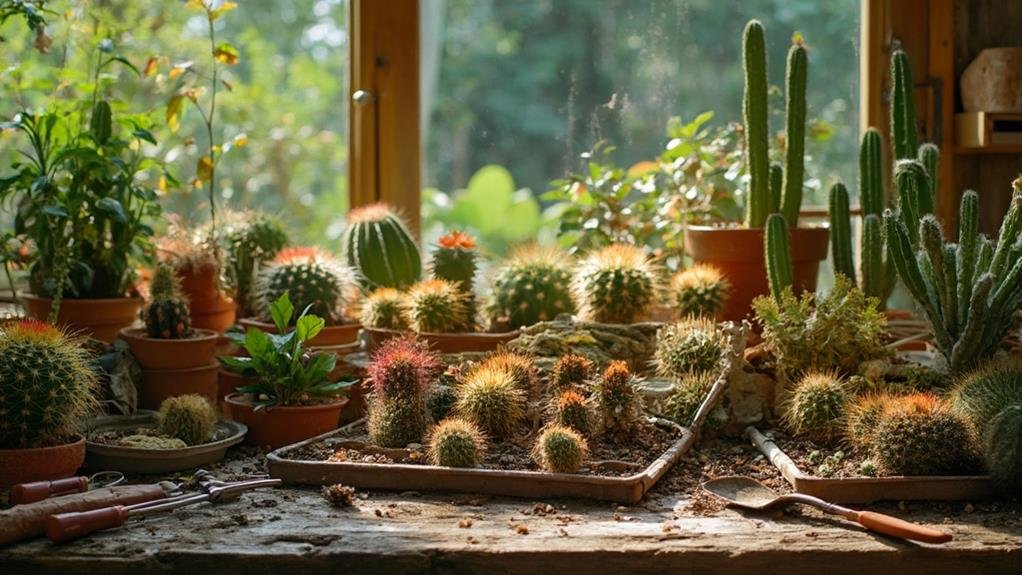
To get started on your cacti collection, you'll need a few essential materials to guarantee your plants thrive. First, gather small pots with drainage holes. These will help prevent waterlogging, ensuring your cacti stay healthy.
Next, pick up a well-draining potting mix specifically designed for cacti and succulents. This mix provides the right balance of nutrients and drainage.
You'll also want to have a pair of gardening gloves handy. They'll protect your hands while handling spines and thorns. A small trowel or spoon will help you transfer soil into the pots easily.
Additionally, get a spray bottle for watering; it allows you to control moisture without overdoing it.
If you plan to share your cacti with friends or family, consider some labels or markers to identify different varieties. This adds a personal touch and helps others learn about each plant's unique care needs.
Finally, don't forget a sunny spot in your home where these beauties can soak up the light they love.
With these materials in hand, you're ready to begin a rewarding journey of growing and sharing your cacti collection!
Step-by-Step Propagation Method
When you're ready to propagate your cacti, the first step is choosing the right plant to work with.
Different propagation techniques can yield various results, so it's crucial to understand what works best for your chosen cactus.
Once you've propagated, caring for your new plants will guarantee they thrive in their new environment.
Choosing the Right Cactus
Choosing the right cactus for your collection starts with understanding your environment and preferences. Consider the amount of sunlight your space receives. If you have bright, direct light, species like the Golden Barrel or the Saguaro thrive. For shadier spots, opt for cacti like the Christmas Cactus that can tolerate lower light levels.
Next, think about your watering habits. Some cacti, like the Echinopsis, require more frequent watering, while others, like the Agave, prefer to dry out completely between waterings. Knowing how much time you can dedicate to caring for your plants will help you choose the right variety.
Additionally, consider the size and aesthetic you desire. Do you want a towering cactus or something small for a tabletop? Look into different shapes and colors, as they can add character and charm to your collection.
Lastly, think about your local climate. If you're in a colder area, you might want to choose indoor varieties or those that can handle frost.
Propagation Techniques Explained
Once you've selected the right cacti for your collection, it's time to explore propagation techniques to expand it further. One of the easiest methods is by taking offsets, or "pups." Gently twist or cut the pups from the mother plant, ensuring you have a clean break. Allow the pups to dry for a day or two, letting the cut callous over to prevent rot.
Next, prepare a pot with well-draining cactus soil. When the pups are ready, plant them about an inch deep in the soil. Water sparingly, just enough to keep the soil lightly moist but not soggy. Place the pot in a bright spot, avoiding direct sunlight for a few weeks to help them acclimate.
Another technique is leaf cuttings for certain cacti types. Slice a healthy leaf, let it dry for a day, and then plant it in cactus soil as with the pups.
Whichever method you choose, patience is key. With your careful attention, you'll not only grow your collection but also share the joy of gardening with fellow enthusiasts. Happy propagating!
Caring for New Plants
After propagating your cacti, caring for the new plants is vital to secure their successful growth. Start by placing them in a well-draining potting mix, ideally designed for cacti or succulents. Confirm the pots have drainage holes to prevent waterlogging, which can lead to root rot.
Next, water your new plants lightly. Wait until the soil is completely dry before watering again; this helps establish robust root systems.
During the first few weeks, keep them in indirect sunlight to avoid shocking them. Gradually introduce them to more direct light as they acclimate.
Temperature is significant, too. Cacti thrive in warm environments, so maintain a temperature between 70°F and 90°F during the day.
At night, cooler temperatures around 50°F to 60°F can be beneficial.
Timing Your Propagation

When it comes to timing your propagation, you'll want to strike while the iron's hot. The best time to propagate cacti is during their active growing season, typically in spring or early summer. This is when they're most receptive to new growth and can heal more quickly after you take cuttings.
Look for healthy, mature cacti that are ready to share their beauty. If you notice new growth or vibrant colors, that's a good sign they're primed for propagation. Take your cuttings in the morning when temperatures are cooler, as this helps minimize stress on the plant.
Be mindful of the weather, too. Avoid propagating during extreme heat or cold, as these conditions can hinder the success of your efforts. If you live in a particularly hot climate, consider waiting for a cloudy day or taking cuttings in the evening.
Once you've made your cuts, let them callous over for a few days before planting. This step is essential—it protects against rot and sets your new plants up for success.
With the right timing, you'll be on your way to expanding your cacti collection and sharing your love for these unique plants with others!
Caring for New Cacti
Caring for your new cacti starts right after you've let your cuttings callous over. Now that they're ready, it's essential to provide the right environment for them to thrive.
First, choose a well-draining potting mix specifically designed for cacti. This guarantees your cuttings won't sit in water, which could lead to rot.
Place your potted cacti in a bright spot, ideally with indirect sunlight. While they love light, too much direct sun can scorch their delicate skin.
Water your new cacti sparingly; wait until the soil is completely dry before giving them a drink. A good rule of thumb is to check once a week, but adjust based on your environment.
Temperature matters too—aim for a range between 70°F and 90°F during the day with cooler nights. This helps mimic their natural habitat.
Fertilize your cacti lightly with a diluted cactus fertilizer every few months to support their growth without overwhelming them.
Lastly, keep an eye on your cacti for any signs of distress. If they look droopy or discolored, it's time to reassess their care.
Common Mistakes to Avoid
Many new cactus owners trip up by overwatering their plants, thinking more water equals healthier growth. In reality, cacti thrive in dry conditions and can suffer from root rot if you're too generous with the watering can.
Instead, check the soil moisture before watering and aim for a schedule that allows the soil to dry out completely between waterings.
Another common mistake is neglecting the light requirements of your cacti. They need plenty of bright, indirect sunlight. If you place them in low-light areas, they'll become leggy and weak.
Position your cacti near a sunny window, but protect them from harsh afternoon rays to avoid sunburn.
Don't overlook the importance of proper drainage, either. Verify your pots have drainage holes, and use a well-draining soil mix.
Standing water can suffocate roots and lead to decay.
Troubleshooting Growth Issues
Troubleshooting growth issues in your cacti can feel overwhelming, but pinpointing the problem is often the first step toward revitalization.
Start by examining the light conditions. Cacti thrive in bright, indirect sunlight, so if your plants are stretching or leaning, they might need more light. On the flip side, if you notice sunburned patches, it's a sign they're getting too much direct sunlight.
Next, check your watering routine. Overwatering is a common mistake that can lead to root rot, while underwatering can stunt growth. Verify the soil dries out between waterings, and adjust your schedule based on the season.
Soil quality also plays an important role. A well-draining cactus mix is essential. If your soil retains too much moisture, consider repotting your cacti into a more suitable medium.
Lastly, keep an eye out for pests. Look for signs of mealybugs or spider mites, which can hinder growth. If you spot any, treat your cacti promptly with an appropriate pesticide or a natural solution like soapy water.
Expanding Your Cacti Collection
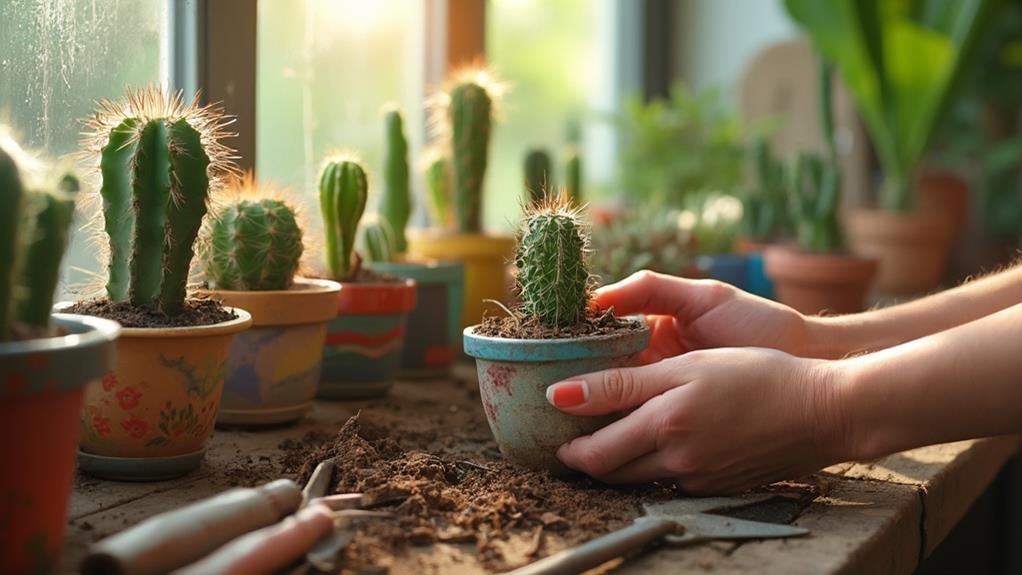
Expanding your cacti collection can be a rewarding endeavor, especially if you're enthusiastic to explore the diverse shapes and colors these plants offer.
By sharing your passion, you not only enhance your collection but also inspire others to appreciate these unique specimens.
Start by connecting with local plant enthusiasts. Join community groups or online forums where members share cuttings or seeds.
This way, you can acquire new varieties without spending a dime. When you receive a cutting, remember to care for it properly—allow it to callous over before planting, ensuring it thrives.
Consider organizing a plant swap event in your local community. Invite friends and neighbors to bring their own cacti or succulent cuttings.
This not only helps expand your collection but also fosters a sense of camaraderie among plant lovers.
You can also propagate your existing cacti. With a little patience, you can create new plants from offsets or seeds, nurturing them into beautiful specimens that you can gift or trade.
As you grow your collection, remember to share your knowledge. Educating others about cacti care can encourage more people to enjoy the beauty of these resilient plants.
Frequently Asked Questions
Can I Propagate Cacti in Winter?
Yes, you can propagate cacti in winter, but it's trickier. Make sure your cuttings are dry before planting. Keep them in a warm, sunny spot to encourage growth, and be patient as they establish roots.
What Types of Cacti Are Easiest to Propagate?
If you're looking to propagate cacti, consider starting with popular varieties like the Prickly Pear, Barrel Cactus, or Christmas Cactus. These are known for their resilience and ability to thrive with minimal care.
How Long Does Propagation Usually Take?
Propagation usually takes a few weeks to several months, depending on the cactus type and conditions. You'll need patience and care, ensuring the right environment to encourage healthy growth and successful rooting for your plants.
Can I Use Store-Bought Cacti for Propagation?
Yes, you can use store-bought cacti for propagation! Just make sure they're healthy and well-cared for. By following proper techniques, you'll successfully grow new plants, sharing your love for cacti with others in no time!
Is There a Specific Soil Type for Cacti Propagation?
For cacti propagation, you'll want a well-draining soil mix, like cactus soil or a combination of potting soil and sand. This guarantees your cuttings root successfully without sitting in excess moisture, which can lead to rot.
Conclusion
With just a little effort, you can easily expand your cacti collection for free through propagation. By following the steps outlined, you'll not only save money but also gain the satisfaction of nurturing new plants from your existing ones. Remember to be patient and attentive as your new cacti grow. Soon, you'll have a thriving collection to admire and share with friends. So grab your tools and start propagating—you're just a few cuttings away from a vibrant garden!