
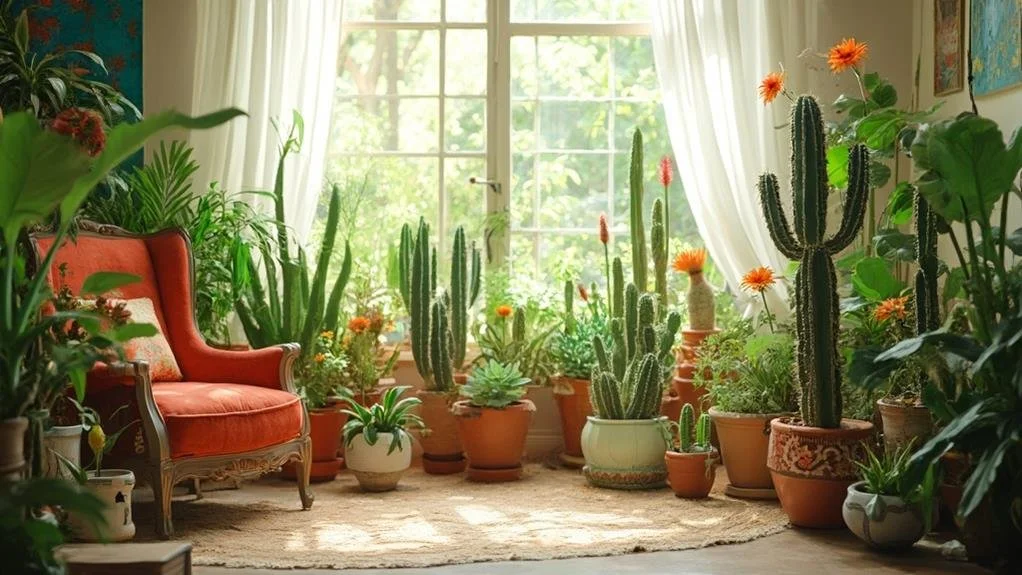
If you're looking to elevate your cactus care routine, you might want to reflect on the morning tips shared by various plant influencers. They emphasize the importance of checking soil moisture, maximizing sunlight exposure, and using filtered water. You may also find that rotating your cacti can lead to healthier growth patterns. But what other secrets are these influencers keeping that could transform your plants into thriving specimens? The answers might surprise you, especially when it comes to choosing the right soil and fertilization techniques.
Key Takeaways
- Water cacti early in the morning to ensure they absorb moisture before the heat of the day increases evaporation.
- Position cacti to receive direct sunlight in the morning, promoting healthy growth and vibrant colors.
- Rotate cacti regularly in the morning light to ensure even exposure and prevent leaning.
- Inspect cactus leaves and soil for pests or abnormalities during morning care routines for proactive health management.
- Use diluted fertilizer in the morning during the growing season to support nutrient absorption before temperatures rise.
Watering Techniques

When caring for your cactus, you'll often find that proper watering techniques are essential for its health. Cacti thrive in arid conditions, so you need to adopt a careful approach to watering.
Start by checking the moisture level of the soil—stick your finger about an inch deep. If it feels dry, it's time to water. Use room temperature water to avoid shocking your plant.
Make sure to water deeply but infrequently. This means you should soak the soil until water drains out of the bottom, then wait until it's thoroughly dry before watering again. Generally, this could be every two to four weeks, depending on your environment.
Consider the season, too; during the growing season (spring and summer), your cactus may need more water, while in winter, you should cut back considerably.
Always prioritize the well-being of your cactus by being attentive to its needs. If you notice any signs of overwatering, such as yellowing or mushy stems, reduce your watering schedule.
Sunlight Requirements
Cacti thrive on sunlight, so it's vital to understand their specific light needs.
Whether you're placing them indoors or outdoors, each environment has unique requirements that can affect their health.
As seasons change, you'll need to adjust their exposure to guarantee they get the ideal light they crave.
Optimal Light Exposure
To thrive, cacti need plenty of bright sunlight, ideally between six to eight hours a day. Position your cacti near a south or west-facing window to guarantee they're soaking up those rays. Remember, the right light exposure is vital for their health and vibrant appearance.

If you notice your cactus stretching or leaning, it's a sign it's not getting enough light.
While cacti love sunlight, be mindful of sudden exposure to intense light, especially after being in a low-light environment. This can cause sunburn, which might damage the plant. Gradually introduce your cactus to stronger light if you've moved it.
You might also want to rotate your cacti occasionally. This makes sure all sides receive equal sunlight, promoting balanced growth and preventing lopsidedness. If you're unsure about the light conditions, consider using a light meter.
Additionally, if you live in particularly hot climates, providing some afternoon shade can protect your cacti from excessive heat.
Indoor vs. Outdoor Placement
Choosing the right placement for your cacti can greatly impact their growth and overall health. When deciding between indoor and outdoor options, consider the sunlight requirements of your specific cactus species. Most cacti thrive in bright, direct sunlight, making outdoor placement ideal for many varieties. However, make sure you gradually acclimate your cacti to full sun exposure to prevent sunburn.
If you're keeping your cacti indoors, select a south or west-facing window where they'll receive ample sunlight. It's essential to rotate your plants occasionally to guarantee all sides receive equal light, promoting even growth.
Additionally, be mindful of seasonal changes; indoor lighting may vary, so you might need to supplement with grow lights during darker months.
On the other hand, outdoor placement requires vigilance. Protect your cacti from harsh midday sun, especially during peak summer, as intense heat can harm them. Consider partial shade or a spot with filtered light during the hottest hours.
Seasonal Sunlight Adjustments
As the seasons change, so do the sunlight requirements for your cacti. During the spring and summer, your cacti thrive in bright, direct sunlight. Placing them near a south-facing window can provide the warmth and energy they need to bloom beautifully.
However, as autumn rolls in and winter approaches, it's crucial to adjust their exposure. In the cooler months, cacti benefit from slightly less direct sunlight. Consider moving them a few feet away from the window or providing filtered light to prevent sunburn.
If you're in a region with particularly harsh winters, using sheer curtains can help soften the sunlight while still keeping those precious rays coming through.
Always keep an eye on your plants. If you notice your cactus stretching towards the light or changing color, it might be asking for more sun. On the other hand, if it's turning brown or shriveling, it may be getting too much.
Soil Selection

When choosing soil for your cactus, you need to focus on drainage, pH level, and whether to use organic or inorganic materials.
Cacti thrive in well-draining soil that prevents water from sitting around their roots.
Understanding these factors will help you create the perfect environment for your prickly friend.
Drainage Requirements
Proper drainage is essential for cactus health, as these desert dwellers thrive in environments where excess water is a rarity.
When selecting soil, choose a mix specifically designed for cacti or succulents, which typically includes sand, perlite, or pumice. These materials promote airflow and drainage, preventing roots from sitting in water, which can lead to rot.
You'll want to guarantee your pot has drainage holes. This simple step allows excess moisture to escape, keeping your cactus safe and healthy.
If you're repurposing a container without holes, consider adding a layer of gravel at the bottom to help with drainage.
When watering, do so sparingly. It's better to underwater than overwater, so always check the soil moisture before adding more water.
Stick your finger an inch into the soil; if it feels dry, it's time for a drink.
Ph Level Importance
The pH level of your cactus soil plays an essential role in its overall health and growth. Cacti thrive best in slightly acidic to neutral soils, typically with a pH between 6.0 and 7.0. When the pH level is off, it can hinder nutrient absorption, leading to poor growth or even plant decline.
To serve your cactus well, you need to select soil that maintains the right pH. If you're unsure about your current mix, testing the soil's pH can be an easy first step. You can find affordable pH testing kits online or at garden centers.
If your soil's pH is too low or high, you can amend it by adding lime to raise the pH or sulfur to lower it.
Always opt for high-quality potting mixes designed for cacti or succulents, as they often come pre-formulated with suitable pH levels and drainage capabilities.
Organic vs. Inorganic Mix
Choosing the right soil mix for your cactus can greatly impact its health, especially after you've confirmed the pH level is appropriate.
When considering your options, you'll encounter organic and inorganic mixes, each with its own benefits.
Organic soil mixes often contain natural materials like compost, peat moss, and coconut coir. These components help retain moisture while providing essential nutrients. If you're looking to create a nurturing environment, an organic mix can be advantageous, especially for fostering healthy growth early on.
On the other hand, inorganic mixes typically feature materials like perlite, pumice, or sand. These mixes excel in drainage and aeration, making them ideal for preventing root rot. If you want to guarantee your cactus thrives in drier conditions, an inorganic mix might be your best bet.
Ultimately, your choice should reflect your care philosophy and the specific needs of your cactus. Mixing both types can also yield excellent results, offering a balance of moisture retention and drainage.
Whatever you decide, remember that the right soil mix is a key ingredient in your cactus's journey to health and well-being!
Fertilization Tips
Fertilizing your cactus can greatly enhance its growth and overall health. To serve your plant best, choose a balanced, water-soluble fertilizer specifically formulated for cacti. This guarantees your cactus receives the right nutrients without the risk of over-fertilization. A good rule of thumb is to fertilize every four to six weeks during the growing season—spring and summer.
Before applying fertilizer, make sure your cactus is well-watered. This helps prevent root burn and allows the plant to absorb nutrients effectively. Dilute the fertilizer to half the recommended strength to start, as cacti thrive on lower nutrient levels.
When you're ready to fertilize, pour the mixture around the base of the cactus, avoiding direct contact with the stem to prevent damage. After fertilizing, continue regular watering, but be mindful of the specific needs of your cactus species.
Always observe your plant's response to the fertilizer. If you notice any signs of distress, such as yellowing or wilting, it may be time to adjust your approach.
Pest Prevention
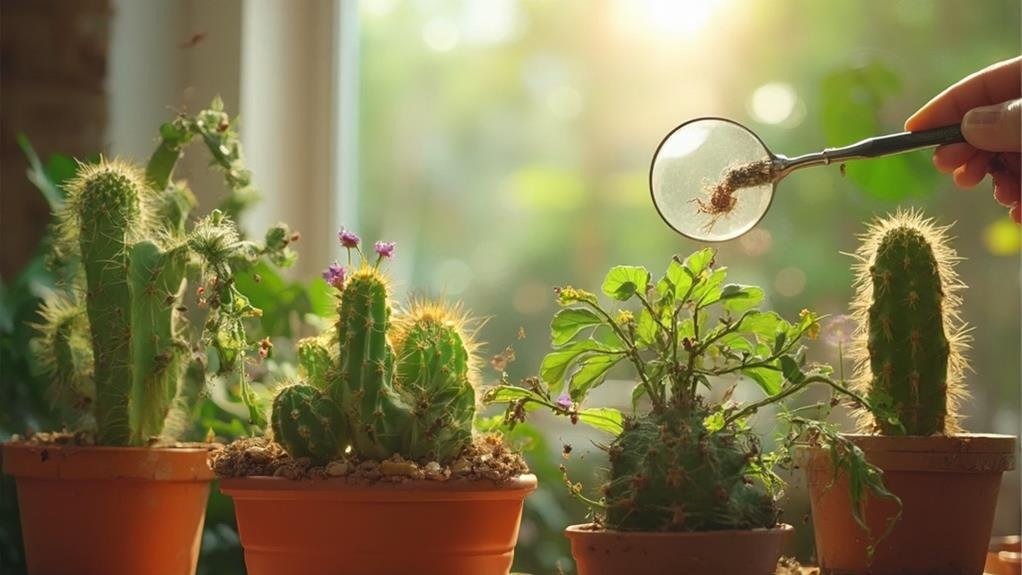
To keep your cactus healthy, you need to focus on pest prevention.
Using natural pest deterrents and regularly inspecting your plants can make a big difference.
Natural Pest Deterrents
While pests can threaten the health of your cactus, using natural deterrents can keep these unwanted visitors at bay. One effective approach is to introduce beneficial insects like ladybugs and lacewings to your garden. These tiny allies feast on pests such as aphids and mealybugs, providing a natural balance in your plant ecosystem.
Another simple solution is to create a homemade pest spray. Mixing water with a few drops of dish soap and a dash of neem oil can deter various pests without harming your cactus. Just be sure to test it on a small area first!
Consider also using companion planting. Some plants naturally repel pests. For example, planting marigolds nearby can help ward off unwanted insects. Plus, they add a pop of color to your garden!
Lastly, maintaining proper watering and sunlight conditions for your cactus will strengthen its defenses, making it less appealing to pests.
Regular Inspection Techniques
Regular inspections are essential for keeping your cactus healthy and pest-free. By regularly checking your plant, you can catch any potential issues before they escalate.
Start by examining the soil for signs of pests like gnats or larvae. Gently remove the cactus from its pot to inspect the roots; healthy roots should be firm and white, while unhealthy ones may appear brown or mushy.
Next, look closely at your cactus's surface. Check for any spots, webbing, or discoloration that might indicate a pest problem. Pay special attention to the joints and crevices, as these areas often harbor unwanted guests.
If you spot any pests, act quickly to remove them using a soft brush or a cotton swab dipped in rubbing alcohol.
Pruning Practices
Proper pruning practices can substantially enhance your cactus's health and appearance. To start, you'll want to assess your cactus regularly for any dead or damaged pads. Using clean, sharp tools is crucial; this prevents disease and promotes healthy growth. When you spot a blemish or an overgrown segment, prune it back carefully. Aim for a clean cut at the joint, which encourages new growth.
Timing is essential too. Late winter or early spring is the best time for pruning, as your cactus is just waking from dormancy. This way, your plant can focus its energy on healing and new growth.
Don't forget to remove any offsets or pups that have outgrown their space; this not only keeps your cactus looking tidy but also gives you opportunities to share with fellow plant lovers.
After pruning, consider applying a light layer of cactus-safe fertilizer to support recovery. Regular pruning not only improves aesthetics but also helps prevent overcrowding, ensuring each segment receives adequate light and nutrients.
Temperature Management

After pruning your cactus, it's important to contemplate temperature management to guarantee your plant thrives. Cacti flourish in warm environments, typically between 70°F to 100°F during the day. If you're bringing your cactus indoors, find a bright spot that mimics these conditions. Avoid placing it near drafts or heating vents, as sudden temperature changes can stress your plant.
During the nighttime, cacti enjoy cooler temperatures, ideally around 50°F to 60°F. This fluctuation mimics their natural habitat and helps in the development of vibrant blooms. If your plant's been outside, gradually acclimate it to indoor conditions to prevent shock.
In the winter, be mindful of your cactus's specific needs. Most varieties enter a dormancy period and prefer slightly cooler temperatures, which helps them conserve energy. You might reduce watering during this time, as your cactus won't need as much moisture in lower temperatures.
Always remember to observe your cactus for signs of distress, like wilting or discoloration, which can indicate that it's unhappy with its temperature. By ensuring the right conditions, you're truly serving your cactus, promoting its health and beauty.
Container Choices
Choosing the right container for your cactus can greatly impact its growth and overall health. When you select a pot, consider materials like terracotta or ceramic. These options provide breathability, which helps prevent root rot by allowing excess moisture to escape.
Drainage is essential, so always choose a pot with holes at the bottom.
The size of the container matters too. You want a pot that's slightly larger than your cactus's root ball. A snug fit encourages healthy root development, while too much space can lead to overwatering issues.
Don't forget about aesthetics! A beautiful container can enhance your home's decor and bring joy to those who admire your cactus. Consider colors and designs that speak to you and match your style.
Lastly, think about how your container choice impacts repotting. As your cactus grows, you'll need to transfer it to a larger pot. Opting for a lightweight option can make this process easier.
Seasonal Adjustments

Adapting your cactus care to the changing seasons is vital for its health and vigor. As the days grow longer and warmer in spring, your cactus will start to wake up from its dormant state. This is the perfect time to increase watering, allowing the soil to dry out completely between sessions.
Make certain to provide ample sunlight, as your plant craves those rays to fuel its growth.
As summer hits, keep an eye on the temperature. If it's particularly hot, consider moving your cactus to a spot with some afternoon shade to prevent sunburn.
Watering should remain consistent, but always be cautious of overwatering, which can lead to root rot.
When autumn arrives, begin to scale back on watering again. Your cactus will enter a semi-dormant phase, so let the soil dry out more between waterings.
Finally, as winter approaches, minimize both watering and exposure to direct sunlight. This rest period is vital for your cactus's overall health.
Propagation Methods
Often, cactus enthusiasts look for effective ways to propagate their plants and expand their collection. You'll find that there are several methods to achieve this, each tailored to different types of cacti.
One popular approach is to take offsets, or "pups," from the parent plant. Simply twist or cut these small growths from the base, let them dry for a few days, and then plant them in well-draining soil.
Another method is seed propagation. Gather seeds from your favorite cactus by allowing flowers to mature and dry. Then, plant the seeds in a shallow container filled with cactus mix. Keep the soil moist but not soggy, and provide warmth and light for successful germination.
If your cactus has a thick stem, you might try stem cuttings. Cut a healthy section, let it callous for a few days, and then plant it upright in soil.
Whichever method you choose, patience is key!
Sharing your propagation journey with fellow plant lovers not only spreads joy but also enriches your community. Happy propagating!
Frequently Asked Questions
How Often Should I Rotate My Cactus for Even Growth?
You should rotate your cactus every couple of weeks. This helps it get even sunlight exposure, promoting balanced growth. Keep an eye on its growth pattern, adjusting rotation frequency as needed for best results.
Can I Use Regular Houseplant Fertilizer for My Cactus?
You can use regular houseplant fertilizer for your cactus, but it's best to dilute it. Cacti need less nutrients than most houseplants, so aim for a balanced, low-nitrogen formula to keep your plant thriving.
What Are the Signs of a Happy Cactus?
A happy cactus shows vibrant color, healthy growth, and firm, plump pads. You'll notice it thriving in bright light, with minimal pests. When you see these signs, you know you're doing a great job!
Is It Safe to Use Tap Water for My Cactus?
Using tap water can be safe for your cactus, but check its mineral content first. If it has high levels of salts or chlorine, consider using distilled or rainwater to keep your cactus thriving.
How Can I Tell if My Cactus Is Root-Bound?
To tell if your cactus is root-bound, check for roots growing out of drainage holes or circling the pot's interior. If you notice these signs, it's time to repot your cactus for better growth.
Conclusion
Incorporating these morning cactus care secrets into your routine can transform your plants into vibrant, thriving beauties. By mastering watering techniques, ensuring they get the right sunlight, and selecting the best soil, you'll set your cacti up for success. Remember to fertilize during the growing season, keep an eye out for pests, and adjust care with the seasons. With a little attention and love, your cacti will flourish and bring joy to your space!