
Did you know that up to 90% of cactus problems can be traced back to improper repotting techniques? Ensuring the health and longevity of your prickly friend starts with mastering the art of repotting.
From selecting the correct pot size to knowing the perfect soil mix, each step plays a crucial role in the process.
Ready to elevate your cactus care skills and cultivate a thriving desert gem in your own home?
Choosing the Right Pot Size
When repotting your cactus, select a pot that's only slightly larger than its current one to prevent overgrowth. Choosing the right pot size is crucial for the health and growth of your cactus. If you opt for a pot that's too large, the excess soil will retain more water, leading to root rot. A pot that's just an inch or two larger in diameter than the current one provides ample space for your cactus to grow without risking water retention issues.
Additionally, consider the depth of the pot. Cacti have shallow root systems, so a deep pot is unnecessary and can again lead to water pooling at the bottom. Ensure that the new pot has drainage holes to prevent waterlogged soil. These holes allow excess water to escape, keeping the roots healthy and preventing fungal diseases.
Selecting the Ideal Soil Mix
To ensure the health and growth of your cactus during repotting, the next crucial step is selecting the ideal soil mix. Choosing the right soil mix is essential as cacti have specific needs to thrive. Opt for a well-draining mix to prevent root rot—a common issue for cacti. A blend of cactus potting mix, perlite, and coarse sand in a 2:1:1 ratio works well. Cactus potting mix provides the necessary nutrients, while perlite aids in drainage and aeration, and coarse sand prevents compacting. Avoid using regular potting soil, as it retains too much moisture, leading to root problems.
When selecting a soil mix, consider the type of cactus you have. Desert cacti, like the Saguaro or Barrel cactus, prefer a mix with more sand to mimic their natural habitat. Jungle cacti, such as Christmas or Easter cacti, thrive in a mix with more organic matter for moisture retention. Adjust the soil mix components based on your cactus species to provide the best growing conditions. Remember, the right soil mix is key to a successful repotting process.
Timing the Repotting Process
Planning is essential when considering the timing of your cactus repotting process. The best time to repot your cactus is during its active growing period, which is typically in the spring or early summer. This timing allows the plant to recover quickly from any damage caused during the repotting process. Avoid repotting during the winter months when the cactus is dormant, as it may struggle to adapt to its new environment. Additionally, refrain from repotting a cactus that's flowering, as this can disrupt its blooming cycle and cause stress to the plant.
If you notice your cactus has outgrown its current pot, it's crucial to wait for the right time to repot it. Signs that your cactus needs repotting include roots growing out of the drainage holes, the plant becoming unstable in its current container, or the soil taking a long time to dry out. By timing the repotting process correctly, you set your cactus up for a successful transition to a new pot and soil mix.
Handling the Cactus Safely
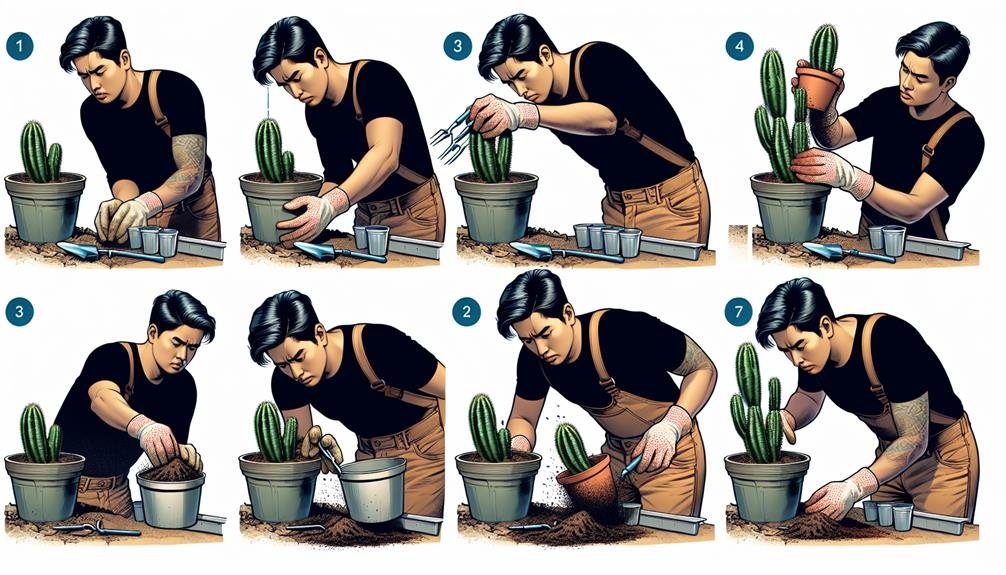
For safely handling your cactus during the repotting process, ensure you have the necessary protective gear such as thick gloves to shield your hands from spines. When it's time to move your cactus, use a pair of long-handled tongs to grasp the plant gently. Avoid touching the cactus directly, as even tiny spines can cause irritation.

Before starting the repotting procedure, carefully inspect the cactus for any loose or decaying parts. If you encounter any damaged areas, handle them with caution to prevent injuries. When removing the cactus from its current pot, support the base of the plant to avoid damaging the roots.
While transferring the cactus to its new pot, hold it steady and avoid sudden movements that could dislodge the soil. Position the cactus carefully in the center of the new pot, ensuring it stands upright. Once the cactus is in place, slowly add fresh soil around the plant, pressing gently to secure it. By handling your cactus with care and attention, you can successfully repot it without harm.
Caring for Your Newly Repotted Cactus
After repotting your cactus successfully, ensure you place it in a location with adequate sunlight for optimal growth. Cacti thrive in bright, indirect sunlight, so find a spot near a window where it can receive plenty of light throughout the day. Be cautious of placing it in direct sunlight right away, as this sudden change may cause sunburn to the plant.
Water your newly repotted cactus sparingly. Overwatering can lead to root rot, so allow the soil to dry out completely between waterings. Depending on the type of cactus, you may only need to water it every 2-4 weeks.
Monitor your cactus for any signs of stress or disease after repotting. Look for yellowing or mushy areas on the plant, which could indicate overwatering or root issues. If you notice any problems, adjust your care routine accordingly.
With proper care and attention, your newly repotted cactus should settle into its new home and continue to thrive. Enjoy watching it grow and flourish in its fresh pot!
Frequently Asked Questions
Can I Repot My Cactus if It Is Currently Flowering?
Yes, you can repot your cactus even if it's currently flowering. It's best to wait until the flowering season is over to minimize stress on the plant.
When you do decide to repot, gently remove the cactus from its current pot and replant it in a new container with fresh soil. Make sure to water it appropriately and provide adequate sunlight to help it adjust to its new environment.
Is It Necessary to Prune the Roots of My Cactus Before Repotting?
Before repotting your cactus, it's not always necessary to prune the roots. If the plant has outgrown its container or the roots are damaged, then pruning might be beneficial.
However, if the roots are healthy and not overly crowded, you can simply transfer the cactus to a new pot with fresh soil. Assess the root system carefully before deciding whether or not to prune.
How Often Should I Water My Cactus After Repotting?
After repotting your cactus, water it sparingly. Allow the soil to dry out completely between waterings to prevent root rot. Stick to a schedule of watering every 2-3 weeks, adjusting based on the specific needs of your cactus and the conditions in your home.
Overwatering can be harmful, so it's better to err on the side of caution. Keep a close eye on the moisture level in the soil to keep your cactus healthy.
Can I Use Regular Garden Soil for My Cactus Instead of a Specialized Mix?
You shouldn't use regular garden soil for your cactus. Specialized mixes are better since they provide the proper drainage and aeration your cactus needs to thrive.
Regular soil can retain too much moisture, leading to root rot. Opt for a well-draining mix designed for cacti to ensure your plant stays healthy.
It's a small change that can make a big difference in the long run!
What Should I Do if My Cactus Shows Signs of Stress After Being Repotted?
If your cactus shows signs of stress after being repotted, make sure to give it some time to adjust to its new environment.
Keep an eye on its water and light needs, and avoid overwatering. Ensure the pot has proper drainage to prevent root rot.
If the stress continues, gently inspect the roots for any issues and consider adjusting the soil mixture.
Patience and care will help your cactus recover from the repotting process.
Conclusion
Now that you have successfully repotted your cactus, remember to give it some time to adjust to its new environment.
Keep an eye on its growth and water it sparingly as needed.
With the right pot size, soil mix, and timing, your cactus should thrive in its new home.
Handle it with care and enjoy watching it flourish in its fresh surroundings.
Happy repotting!


