
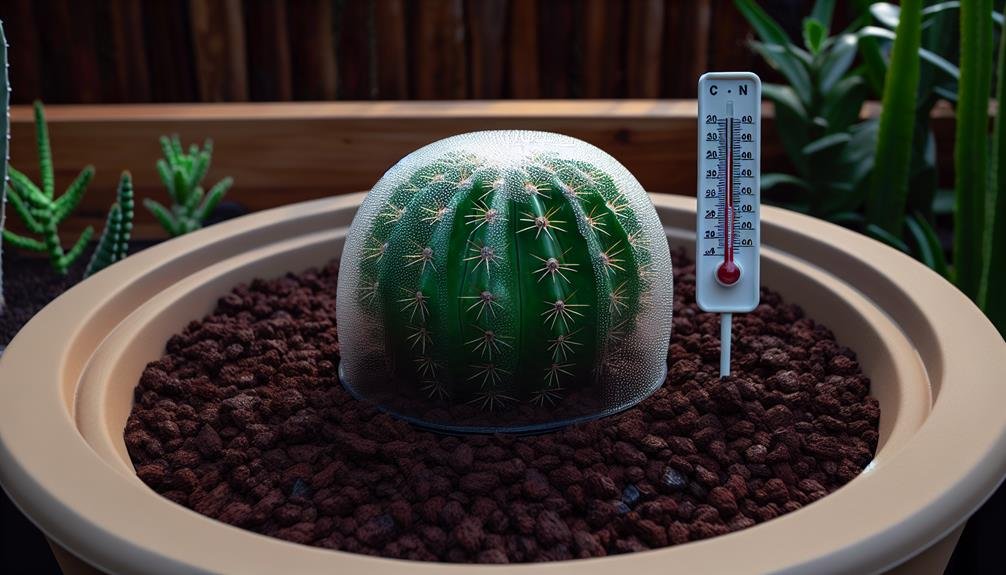
You might think that overwintering outdoor cacti is a tricky task, but with the right guidance, it can be quite manageable. Understanding the specific needs of your cacti during the colder months is crucial for their survival and thriving come spring.
From adjusting sunlight exposure to finding the perfect watering balance, these tips will set you on the path to successfully caring for your outdoor cacti during winter.
By implementing these easy-to-follow suggestions, you can ensure that your cacti stay healthy and vibrant even in the chillier season.
Winter Sunlight Needs
When preparing your outdoor cacti for winter, ensure they receive adequate sunlight to maintain their health and growth. Cacti are sun-loving plants, so finding a sunny spot is crucial. During winter, the sun's angle changes, affecting the amount of sunlight your cacti receive. Place them in a south-facing location to maximize sunlight exposure, ensuring at least six hours of sunlight daily. If your cacti are indoors, consider using grow lights to supplement their light needs.
Proper sunlight exposure helps cacti maintain their vibrant colors and prevents them from becoming etiolated or stretched out. Etiolation occurs when cacti don't receive enough sunlight, causing them to grow tall and thin in search of light. By providing ample sunlight during the winter months, you can help your cacti stay healthy and compact.
Remember to monitor the sunlight conditions regularly, especially if you live in an area prone to overcast skies during winter. Adjust the cacti's placement as needed to ensure they receive the optimal amount of sunlight for their well-being.
Proper Watering Frequency
To maintain the health of your outdoor cacti during winter, it's essential to establish a proper watering frequency. During this season, cacti enter a dormant period where they require less water than in the warmer months. Overwatering can lead to root rot, a common issue during winter. The key is to strike a balance between keeping the soil slightly moist and allowing for proper drainage to prevent waterlogged roots.
Check the soil moisture levels by inserting a finger into the soil about an inch deep. If it feels dry, it's time to water. Typically, outdoor cacti may only need watering every 3-4 weeks during winter. Adjust this frequency based on your specific climate conditions, as extremely cold or dry weather may necessitate more or less watering.
Always use room temperature water when watering your cacti, as cold water can shock the roots. Avoid watering on freezing days, as the water can freeze around the roots, causing damage. By monitoring and adjusting your watering frequency accordingly, you can help your outdoor cacti thrive through the winter months.
Temperature Control Tips
Maintain consistent temperatures to safeguard the health of your outdoor cacti during the winter months. Sudden drops below 50°F (10°C) can harm your cacti, so consider using frost cloths or moving them to a sheltered area if temperatures are predicted to plummet. On the other hand, excessive heat can also be damaging; ensure your cacti aren't exposed to direct sunlight for extended periods, especially during the hottest parts of the day. Ideally, aim for daytime temperatures between 50-65°F (10-18°C) and slightly cooler at night.

If you live in an area prone to drastic temperature fluctuations, placing your cacti near a thermal mass like a stone wall can help regulate the surrounding temperature. Additionally, using a thermometer to monitor the temperature around your cacti can provide valuable insights into any adjustments needed. By paying attention to temperature control, you can create a more stable environment for your outdoor cacti to thrive during the winter.
Soil Drainage Importance
Ensuring proper soil drainage is crucial for the health and well-being of your outdoor cacti, especially during the winter months. Cacti are susceptible to root rot if their roots sit in waterlogged soil for extended periods. To prevent this, use a well-draining soil mix specifically formulated for cacti and succulents. These mixes typically contain materials like sand, perlite, or gravel, which help excess water to flow through the soil more freely.
When water is unable to drain effectively, it can lead to a buildup of moisture around the roots, causing them to rot. This can weaken the plant and make it more vulnerable to diseases and pests. By ensuring proper soil drainage, you create an environment where the roots can thrive and absorb nutrients efficiently.
During the winter months, when cacti are already in a dormant state and not actively growing, excess moisture in the soil can be even more harmful. Proper soil drainage helps to prevent water from lingering around the roots, reducing the risk of root rot and other issues that can arise from waterlogged soil.
Pest Prevention Measures
Properly managing pests is vital to safeguarding the health of your outdoor cacti, building on the foundation of soil drainage you've established. To prevent pest infestations, inspect your cacti regularly. Look for signs of common pests like mealybugs, spider mites, and scale insects. If you notice any pests, act promptly to address the issue before it worsens.
One effective pest prevention measure is to introduce beneficial insects to your cacti garden. Ladybugs, lacewings, and predatory mites are natural predators that can help control pest populations without the need for harsh chemicals. Additionally, neem oil or insecticidal soaps can be used as organic remedies to combat pests while being gentle on your cacti.
Another crucial step in pest prevention is maintaining good airflow around your cacti. Avoid overcrowding them, as this can create a breeding ground for pests. Regularly prune any dead or diseased parts of the cacti to minimize hiding spots for pests. By staying vigilant and implementing these pest prevention measures, you can keep your outdoor cacti healthy and thriving.
Frequently Asked Questions
Can Outdoor Cacti Be Overwintered Indoors if the Temperatures Drop Too Low?
If temperatures plummet outside, it's wise to bring your outdoor cacti indoors for the winter. Without protection, excessively cold temperatures could harm them.
A warm and bright spot inside can help them thrive until spring. Make sure to gradually acclimate them to the indoor environment to prevent shock.
Keep an eye on watering; cacti need less during winter. By providing the right care, your outdoor cacti can successfully overwinter indoors.
How Can I Protect My Outdoor Cacti From Frost During the Winter Months?
To protect your outdoor cacti from frost during winter, cover them with frost cloths or blankets overnight. Bring them indoors if temperatures drop too low. Avoid watering them during cold spells to prevent root rot.
Place cacti in a sheltered spot to shield them from harsh winds. Insulate pots with bubble wrap or mulch to help regulate the soil temperature.
Is It Necessary to Adjust Watering Frequency for Outdoor Cacti When Overwintering?
When overwintering outdoor cacti, adjusting watering frequency is crucial. Cacti require less water during the winter months because they're dormant and not actively growing.
Overwatering can lead to root rot, so be mindful of the soil moisture levels. Check the soil regularly and only water when it's completely dry. This will help your cacti stay healthy and thrive during the winter season.
Are There Any Special Considerations for Overwintering Outdoor Cacti in a Greenhouse?
When overwintering outdoor cacti in a greenhouse, ensure adequate ventilation to prevent excessive humidity. Monitor temperature fluctuations to prevent sudden drops that can harm your plants.
Consider using grow lights if natural light is insufficient. Insulate pots to protect roots from freezing temperatures. Keep an eye out for pests that might take shelter in the warmer greenhouse environment.
Following these precautions will help your cacti thrive during the winter months.
What Are Some Signs That My Outdoor Cacti May Not Be Adjusting Well to the Overwintering Process?
If your outdoor cacti aren't adjusting well to the overwintering process, look for signs like:
- Yellowing or browning of the stems
- Soft or mushy spots
- Wilting or drooping
These could indicate issues with temperature, light, or watering. Keep a close eye on your cacti and make adjustments as needed to ensure they stay healthy during the winter months.
Conclusion
Overall, taking care of outdoor cacti during the winter doesn't have to be complicated. By ensuring they receive enough sunlight, adjusting watering frequency, controlling the temperature, using well-draining soil, and preventing pests, you can help your cacti thrive through the colder months.
With these simple tips, even beginners can successfully overwinter their outdoor cacti and enjoy their beauty year-round. Happy gardening!


